EXHIBITION
Curatorship by Larisa Zmud
Comité357, Bueno Aires, Argentina
April 2025
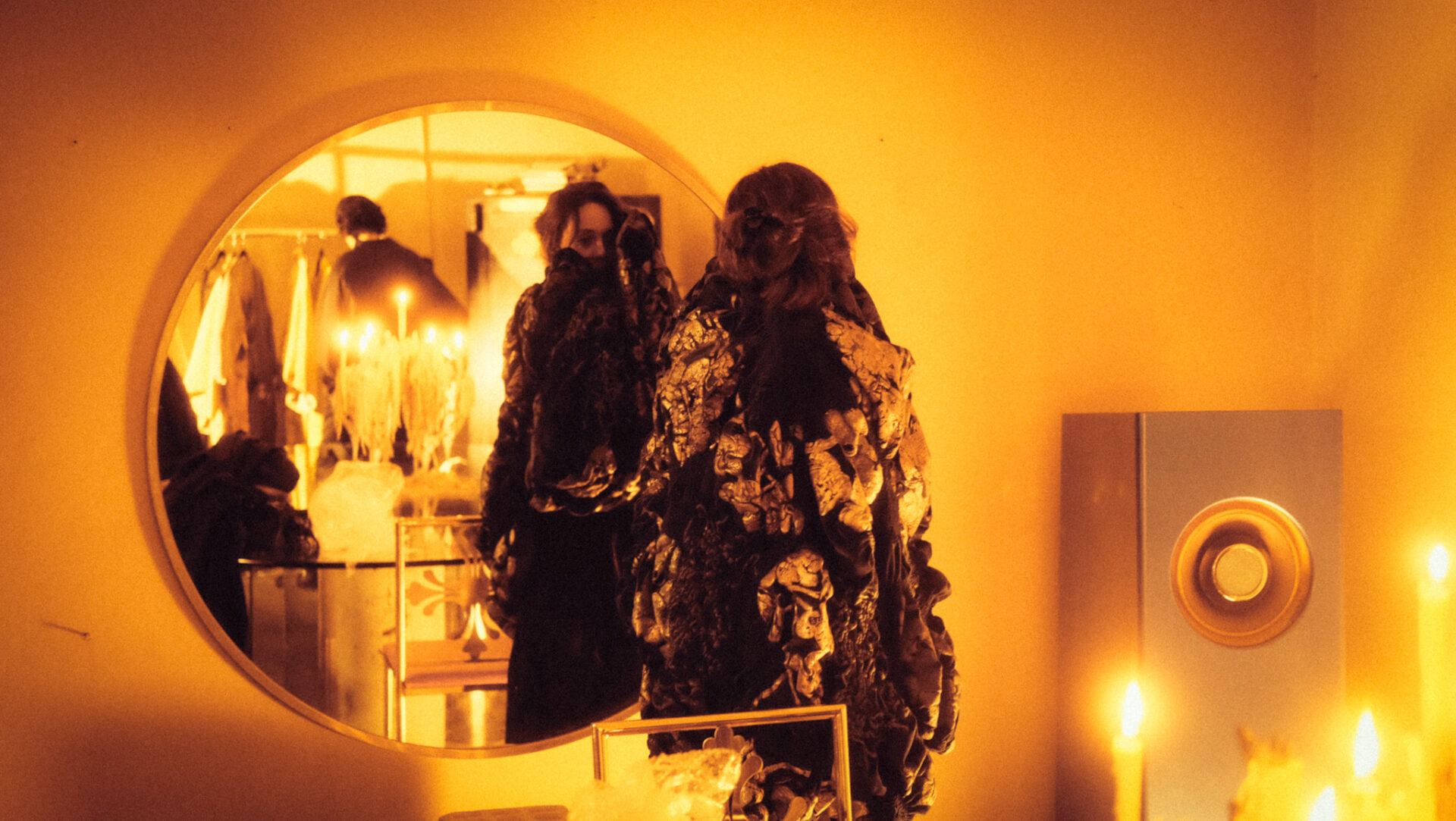
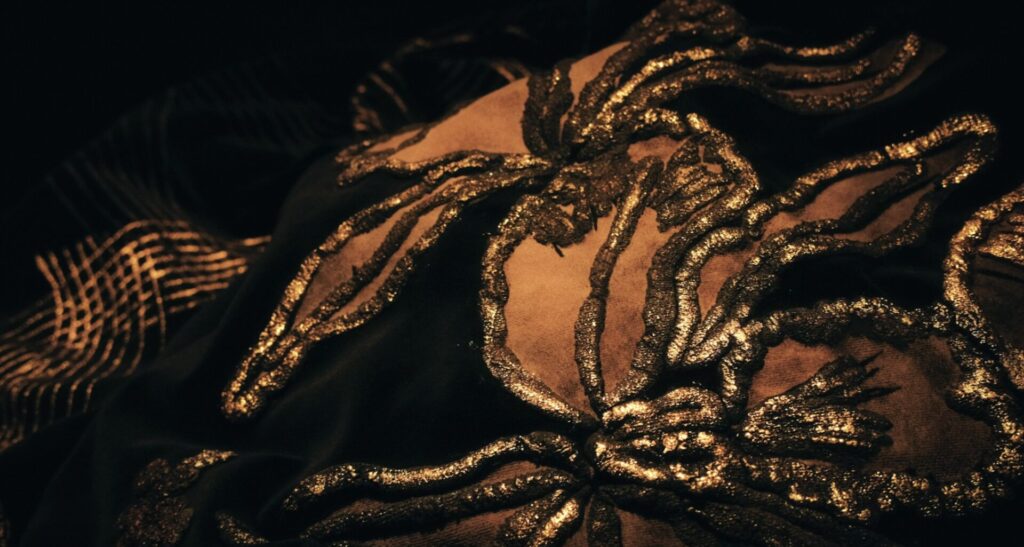
Paisajes Ambulantes Paisajes Ambulantes (Wandering Landscapes) is a textile-sensory installation by Guillermina Lynch that unfolds like an immersive ecosystem. Through a series of velvet coats embellished with experimental screen printing, the artist proposes a crossover between body, landscape, and matter. The garments are presented not only as clothing, but also as narrative surfaces, portable territories, and living archives of sensory experiences.
The exhibition is structured in different moments that follow one another like stations on an intimate and transformative journey: a monumental creature that welcomes the visitor, an underground inhabited by islands, fungi, and velvet robes, amid plant sounds and mystical songs, and a final altar of processes where the intimacy of the workshop becomes visible.
Each piece, each technical gesture, and each texture is part of a material choreography where the technical and the poetic coexist. In Paisajes Ambulantesdressing is not covering oneself: it is inhabiting a story, carrying a fragment of the world, becoming topography.
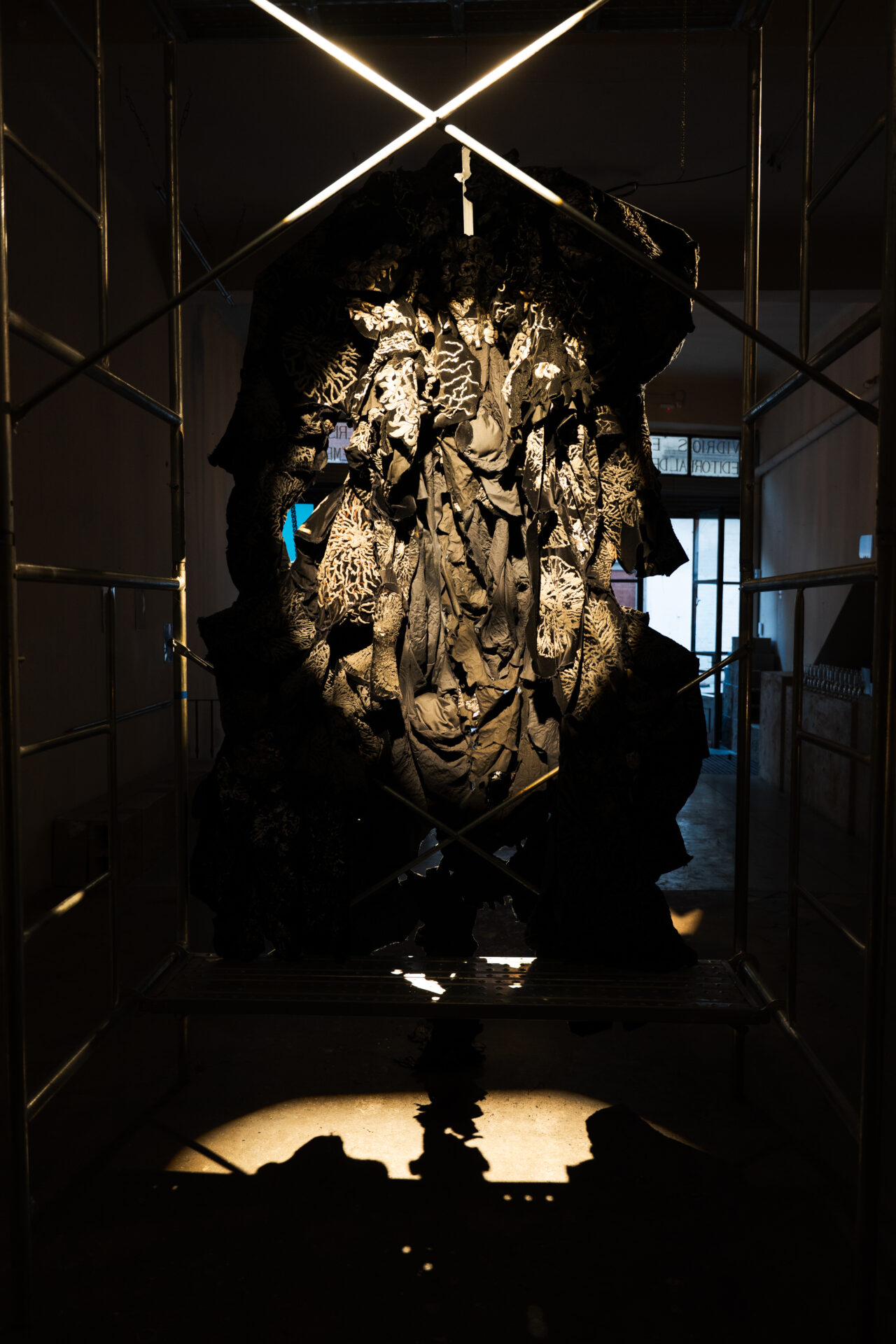
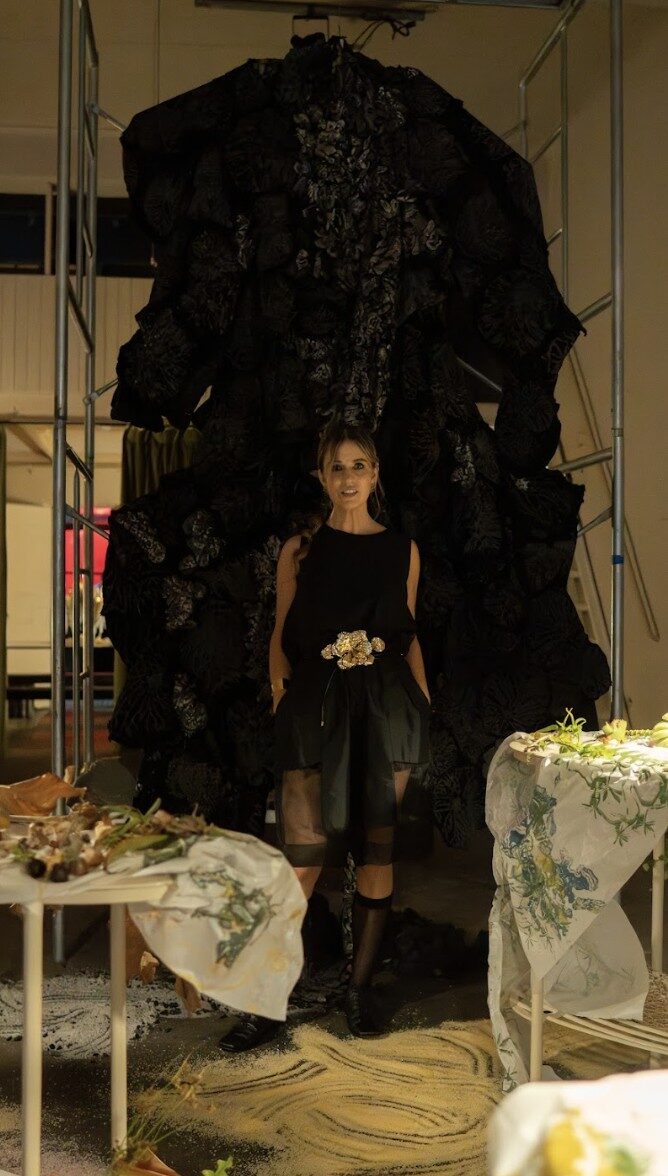
Entrance hall: The Impossible Coat
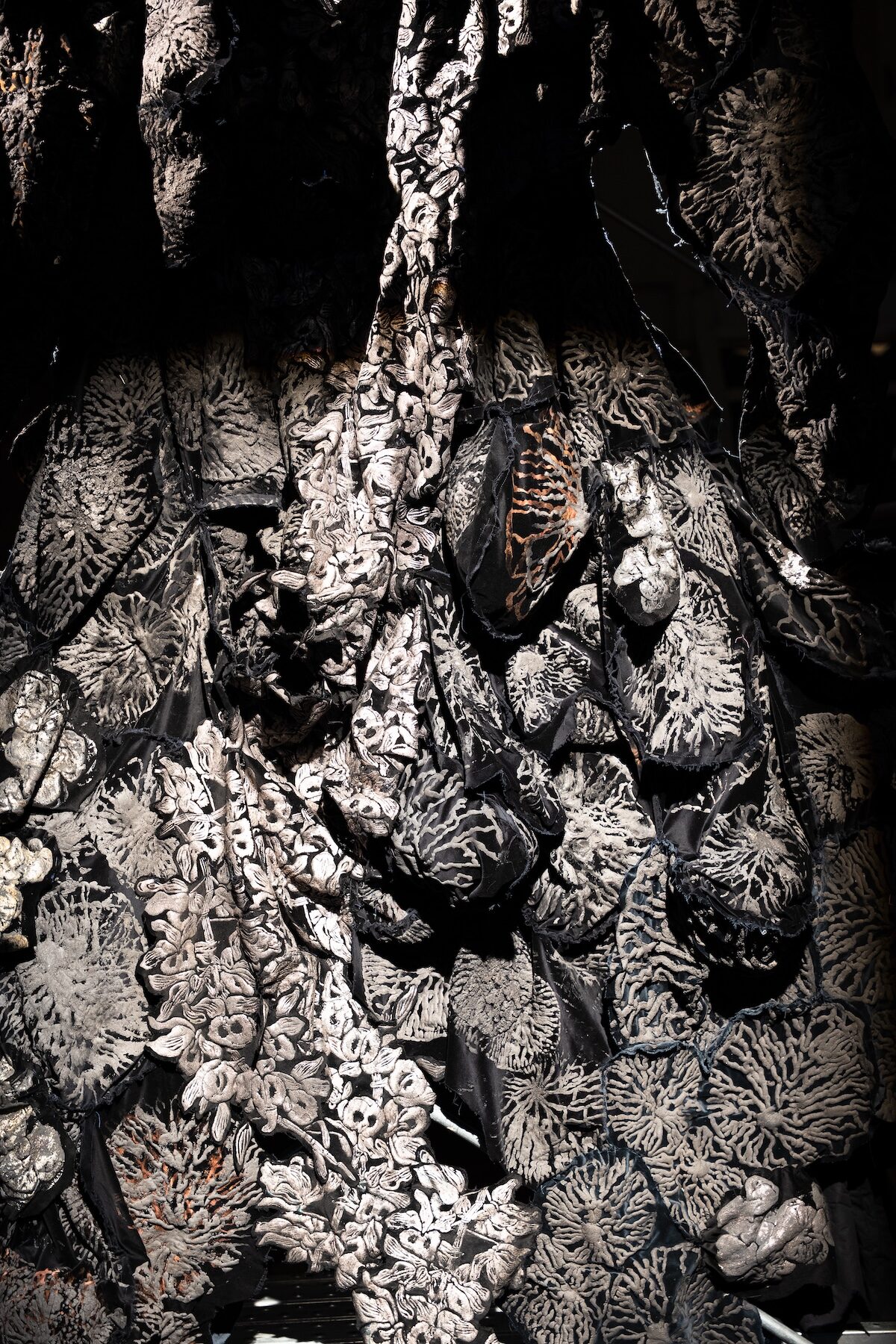
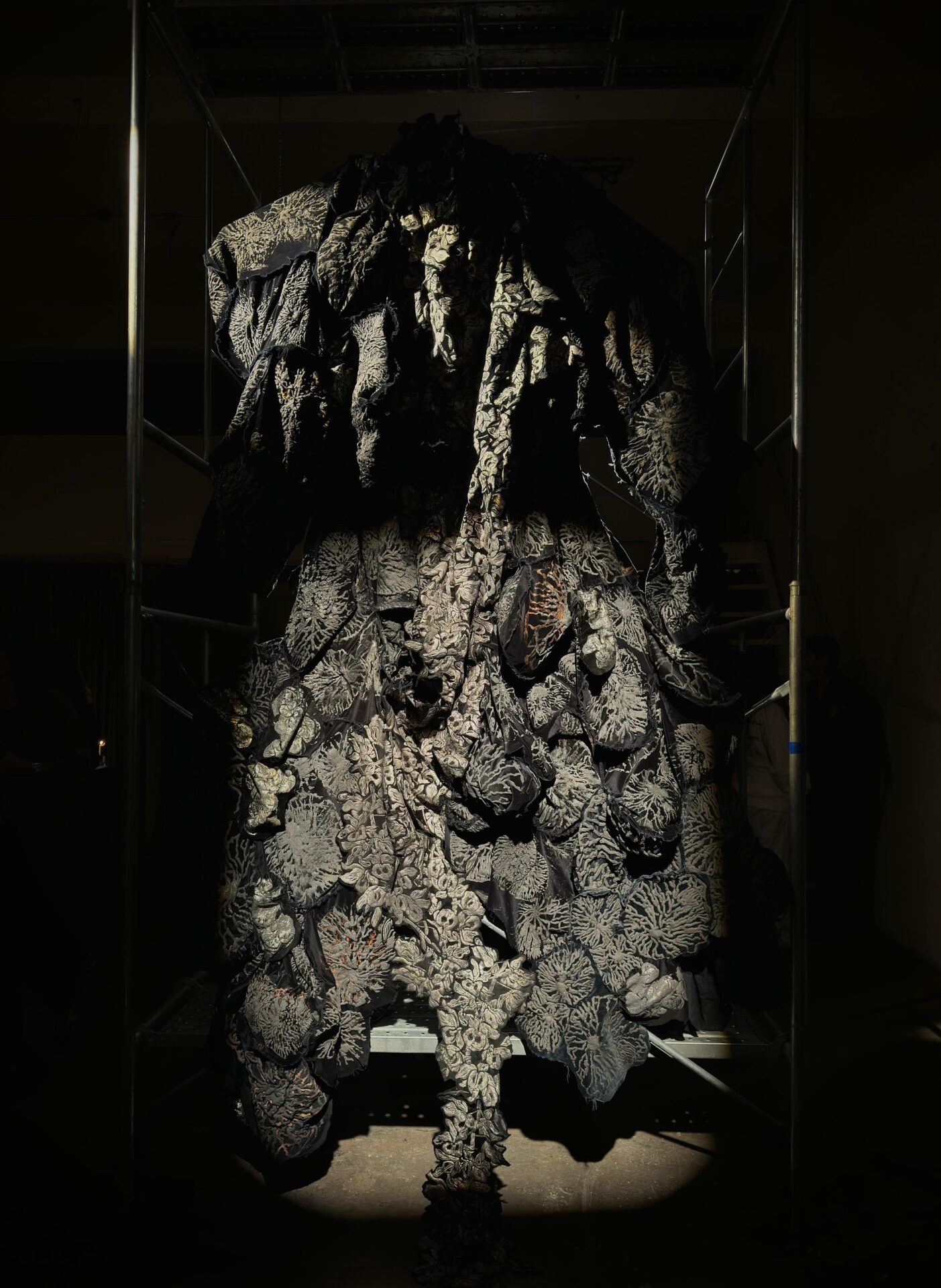
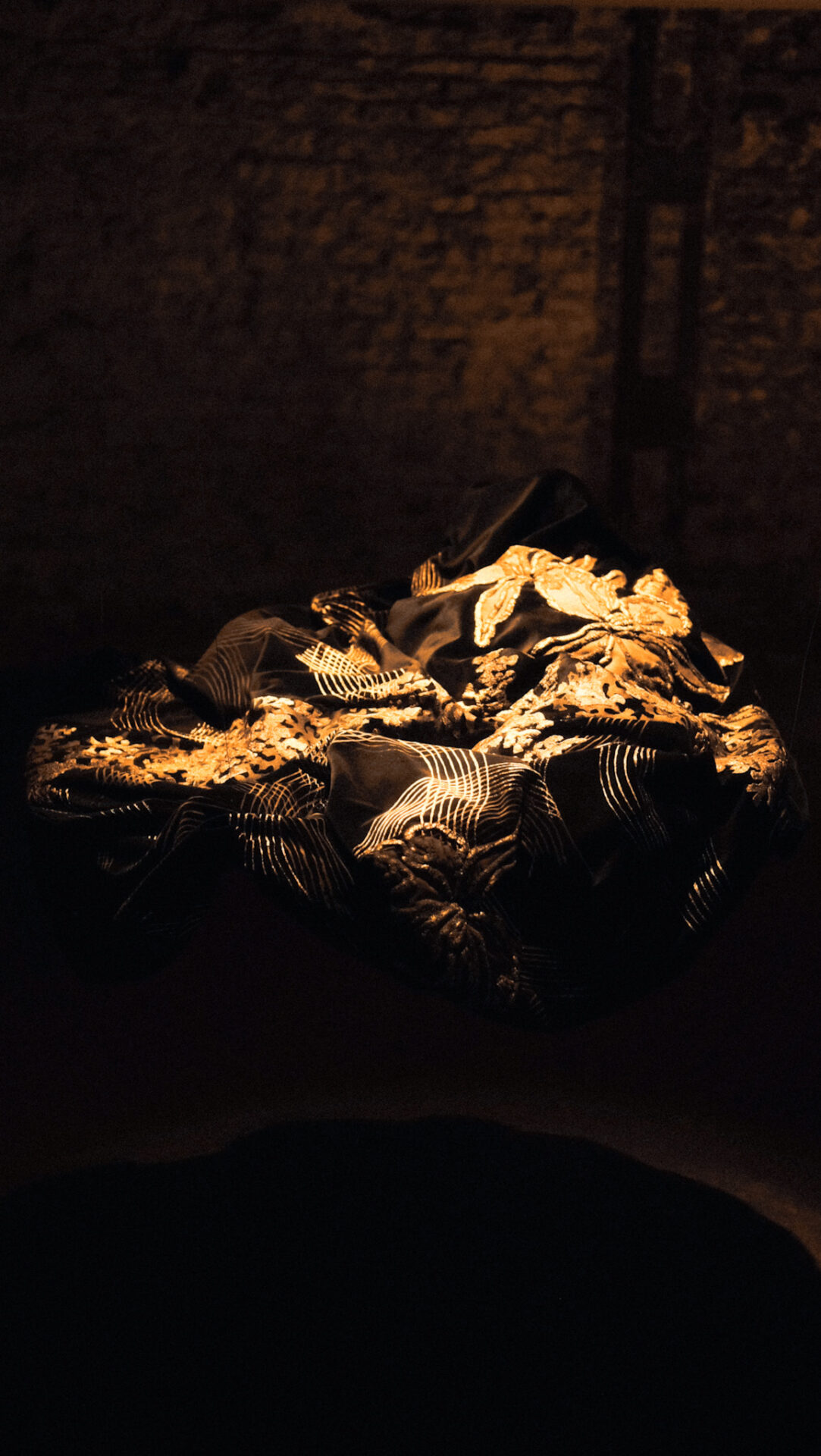
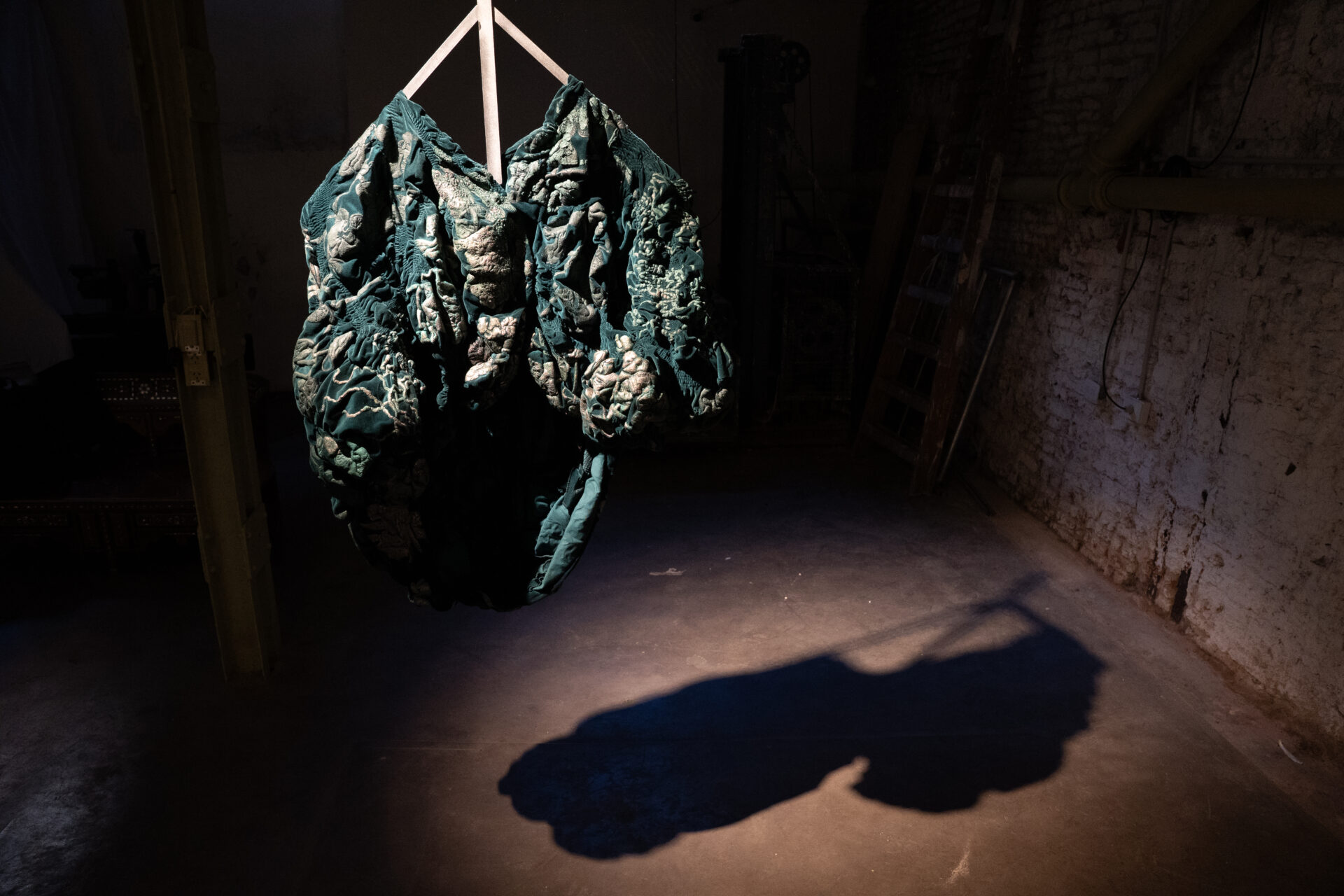
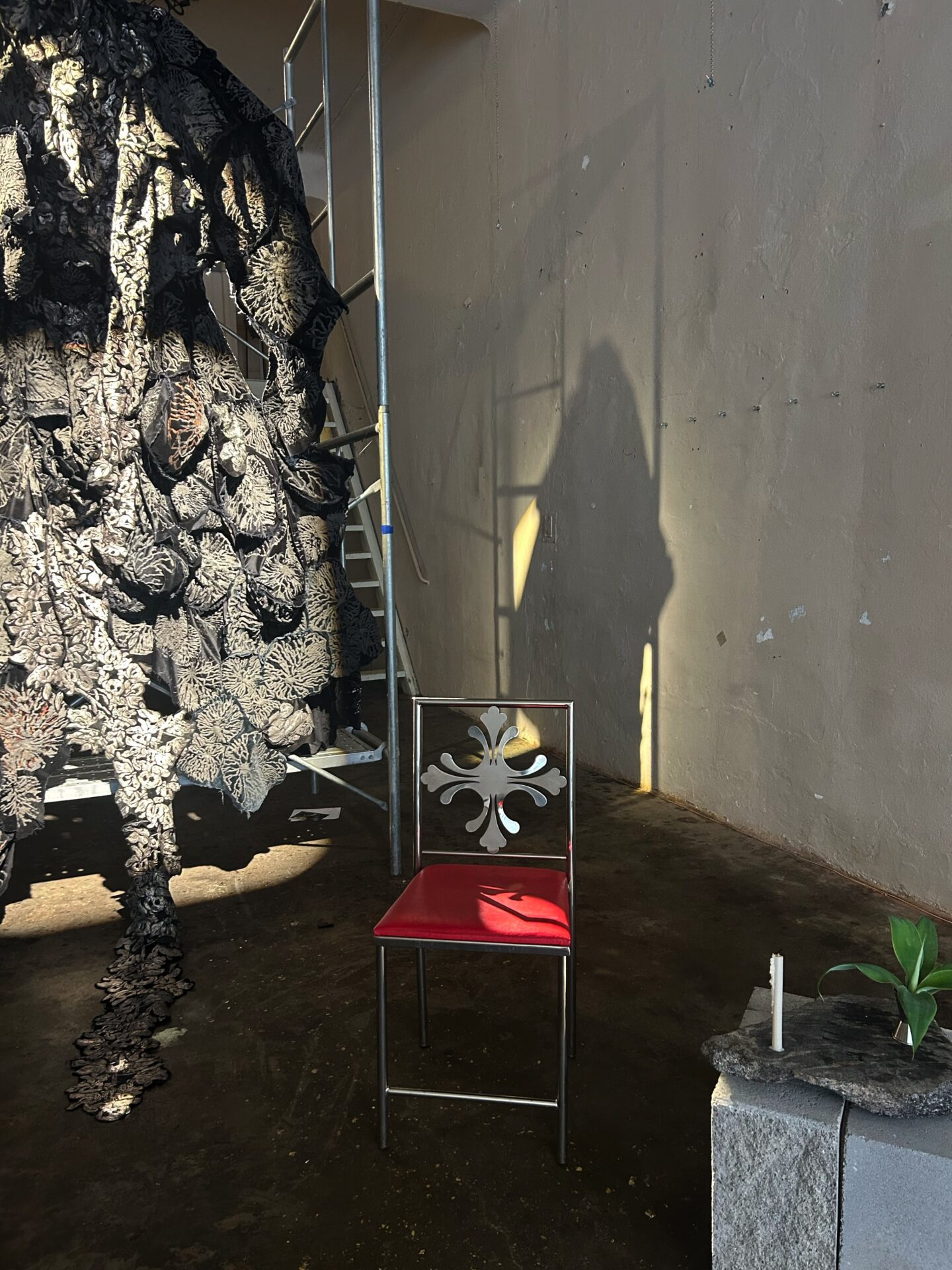
A creature made of black and silver velvet. An overflowing body, made of scraps from past works—like scars—contained within a tower of industrial scaffolding.
Im-portable.
This piece—the entrance door and visual anchor of the
exhibition—fuses the textile and the sculptural, the soft and the
technical, the manual gesture and the raw structure. It functions as an
altar and a relic: a fragment of an expanded body, engraved with the
vegetal imprint of an orchid hardened on its surface, as if time had
stopped its flowering to turn it into texture.


Immersion: The Subterranean Ecosystem
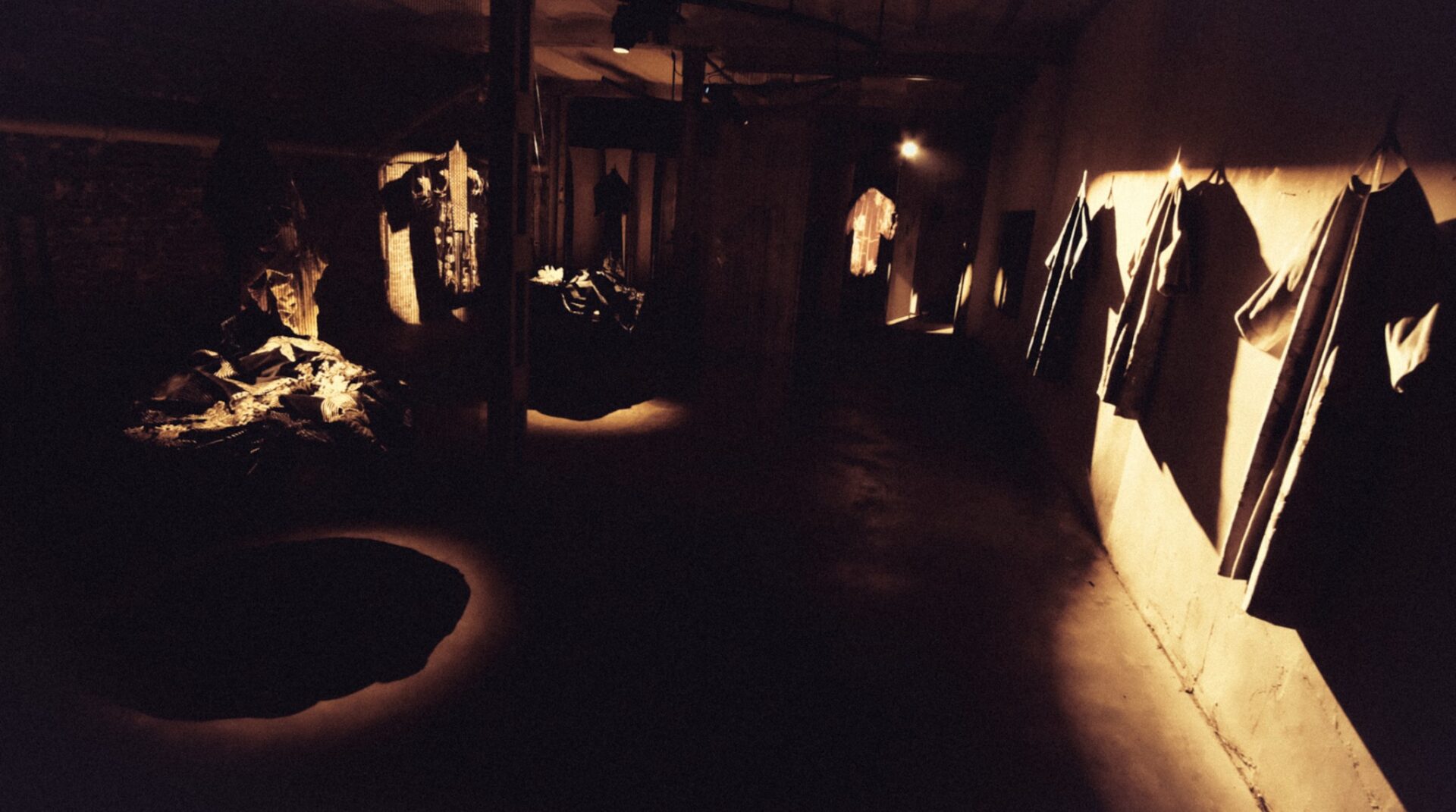
As the body descends into the underworld, the ethereal songs of Hildegard Von Bingen draw nearer, fused with sound experiments that evoke the plant world. The sound, which seems to emanate from the walls themselves, invites you to walk in silence, as if the echo of nature itself were taking control of the space, as if it were a tacit procession.
The soft murmur of the plants, whispering alongside the abbess, intertwines with the vibrations felt through the skin, while a fragrance bursts into the air: a botanical potion of incense, leather, sandalwood, quinoto skin, and agarwood, slowly taking over the senses.
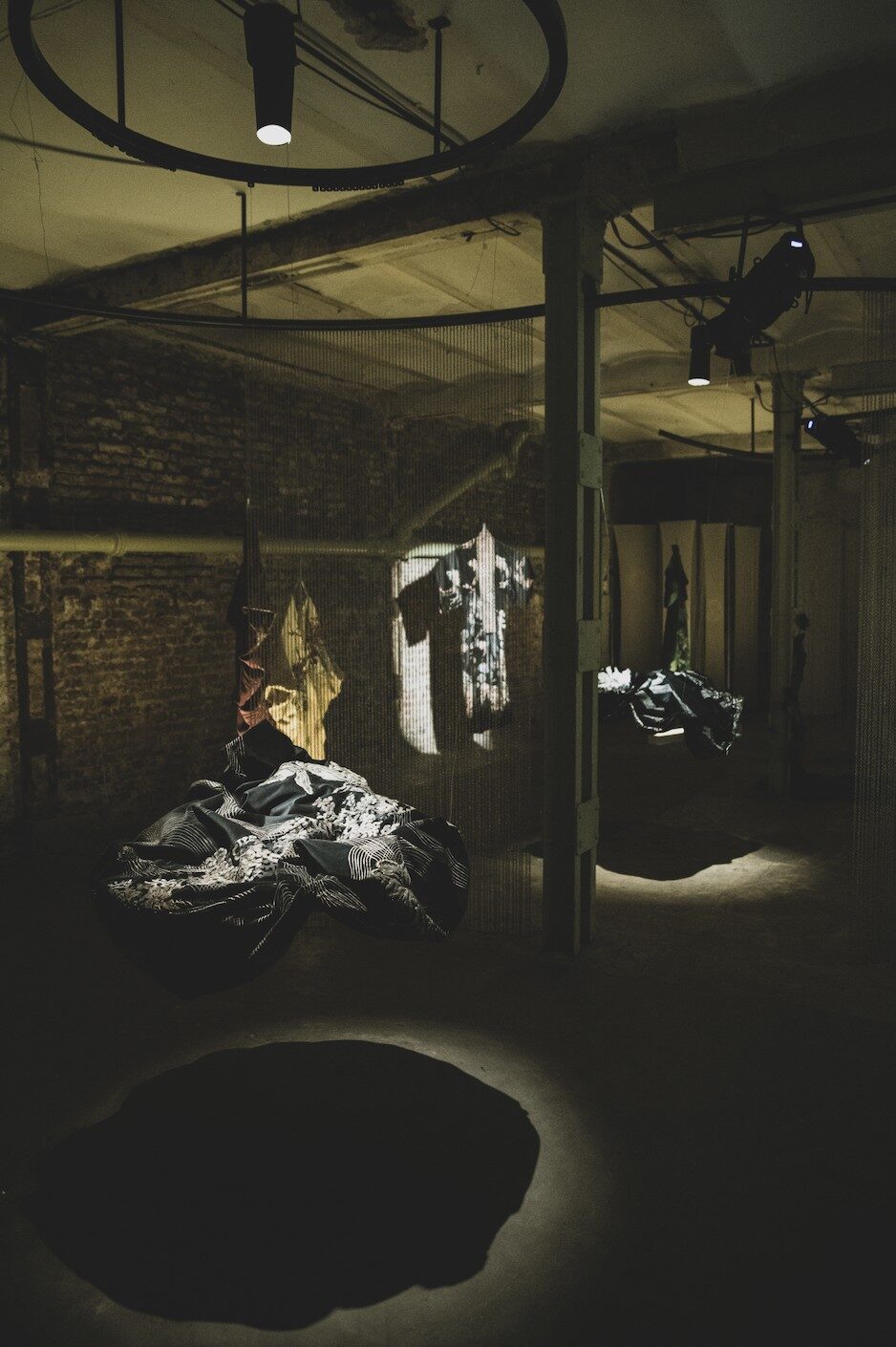
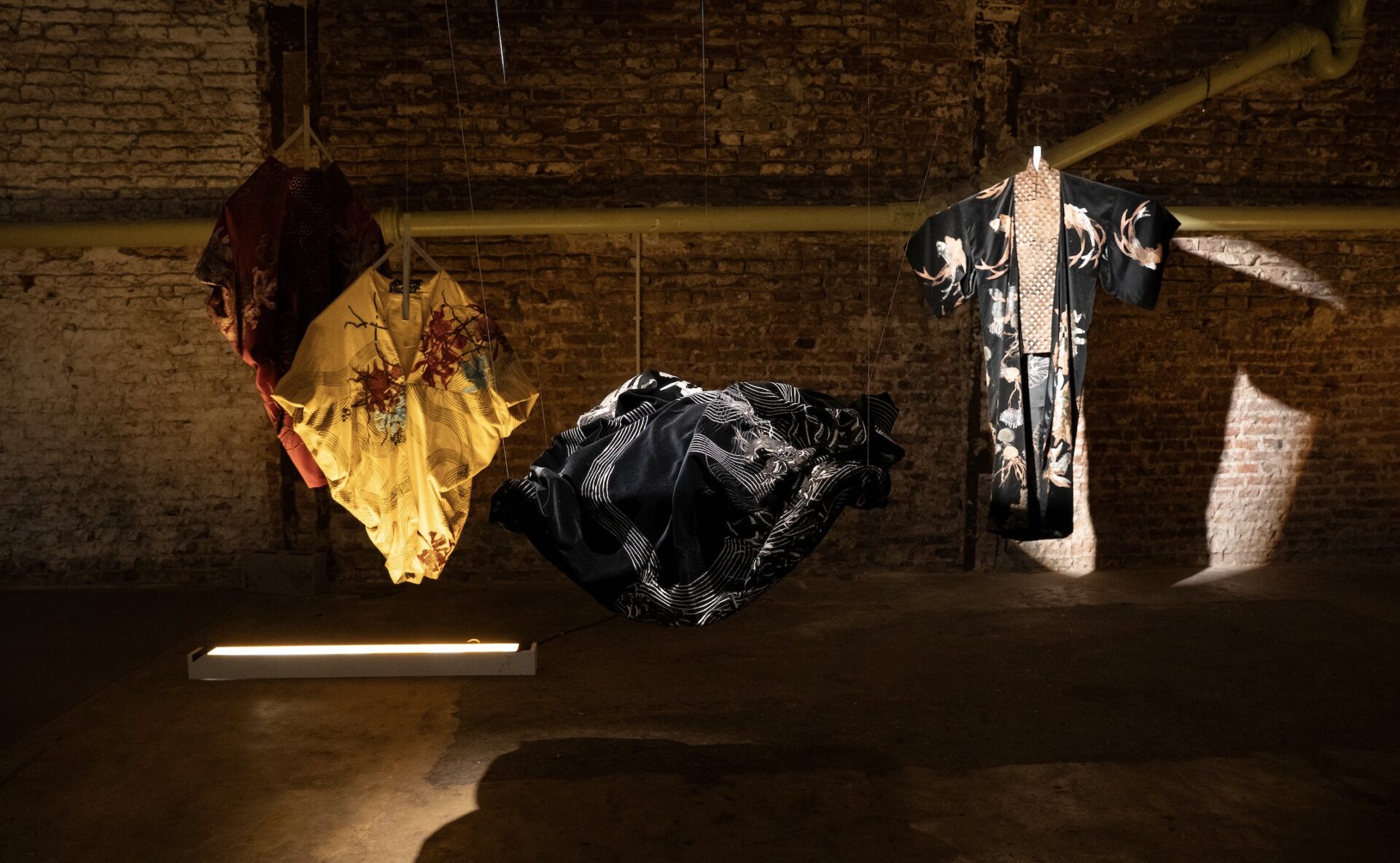
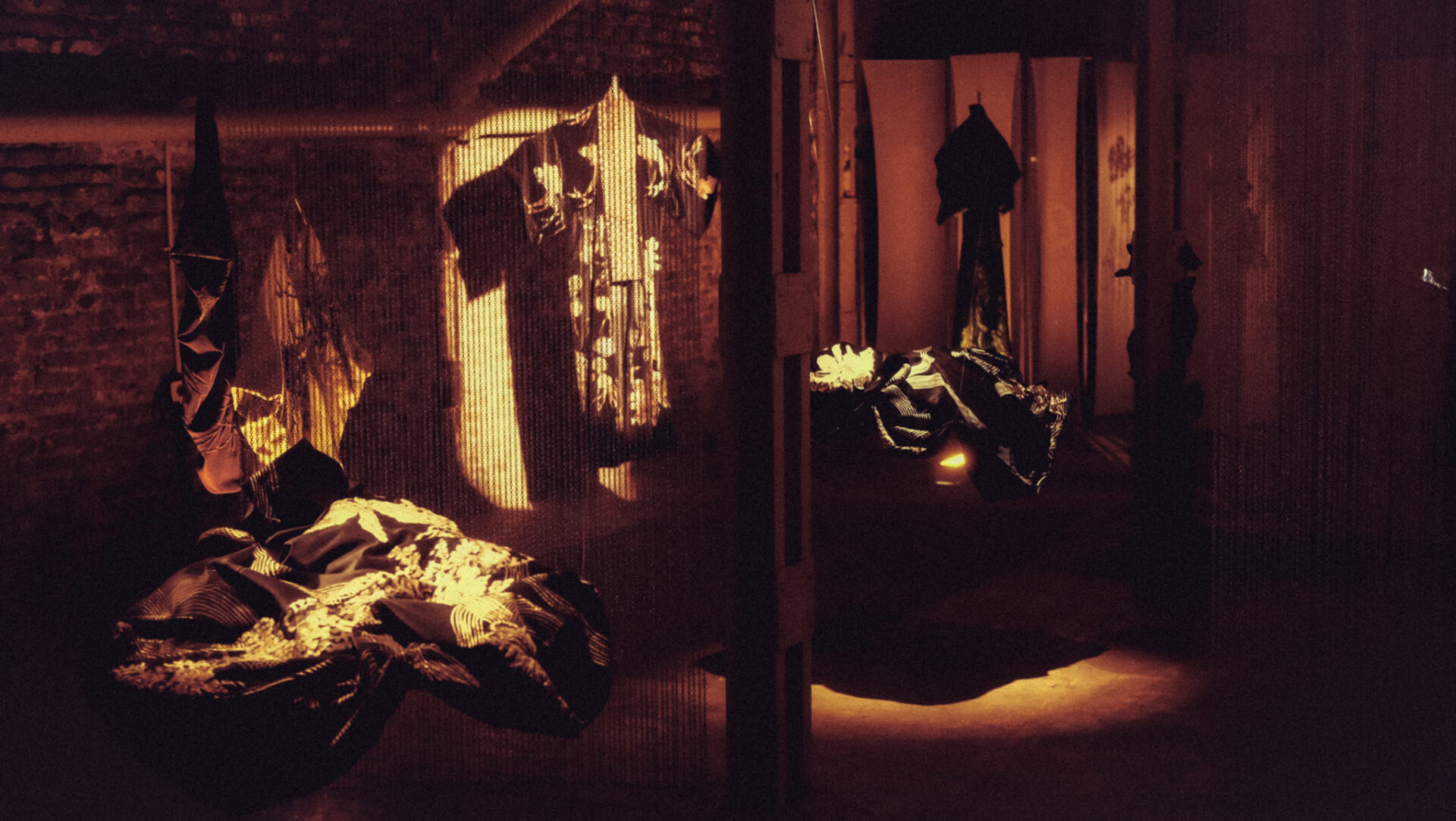
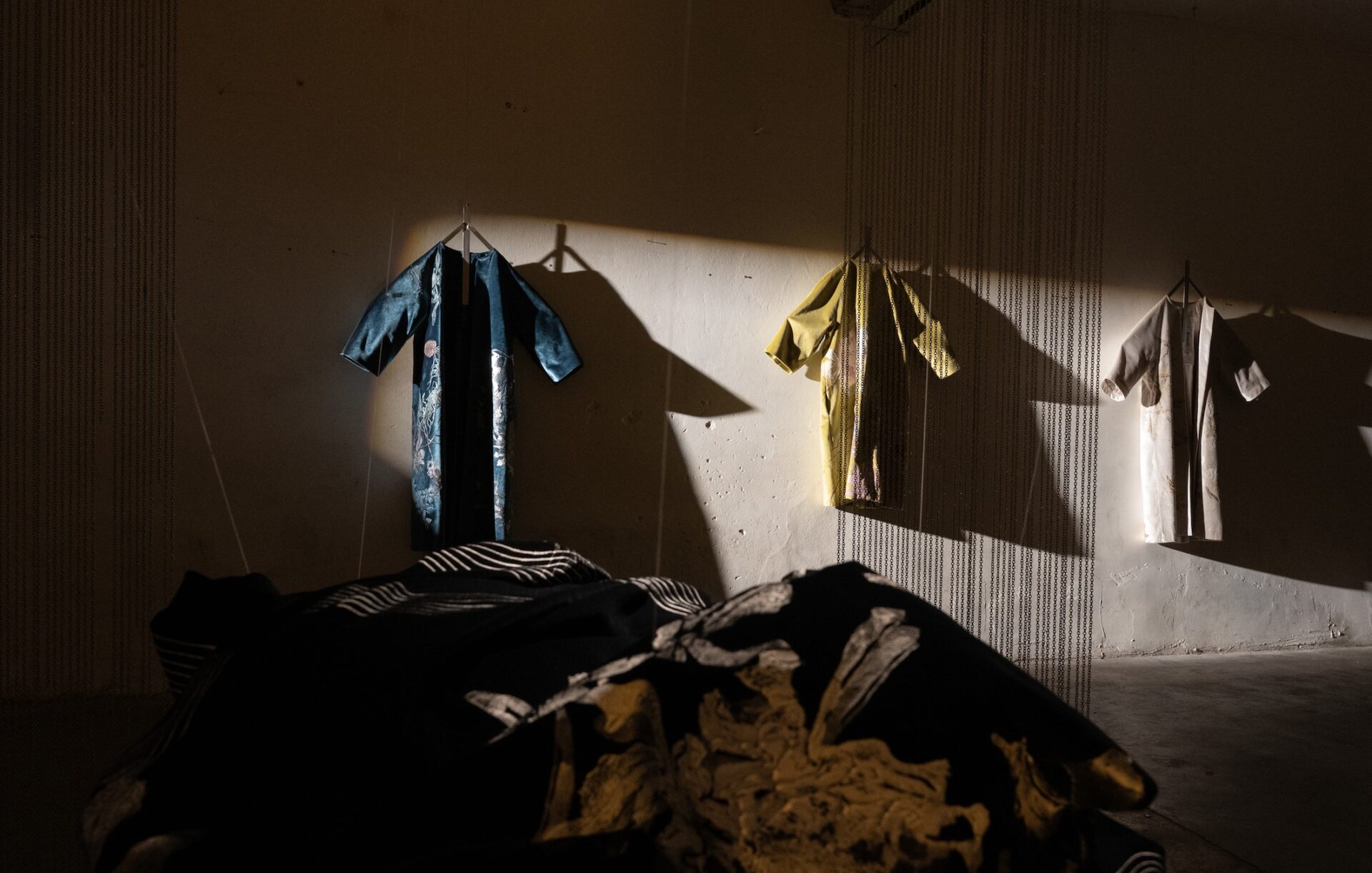
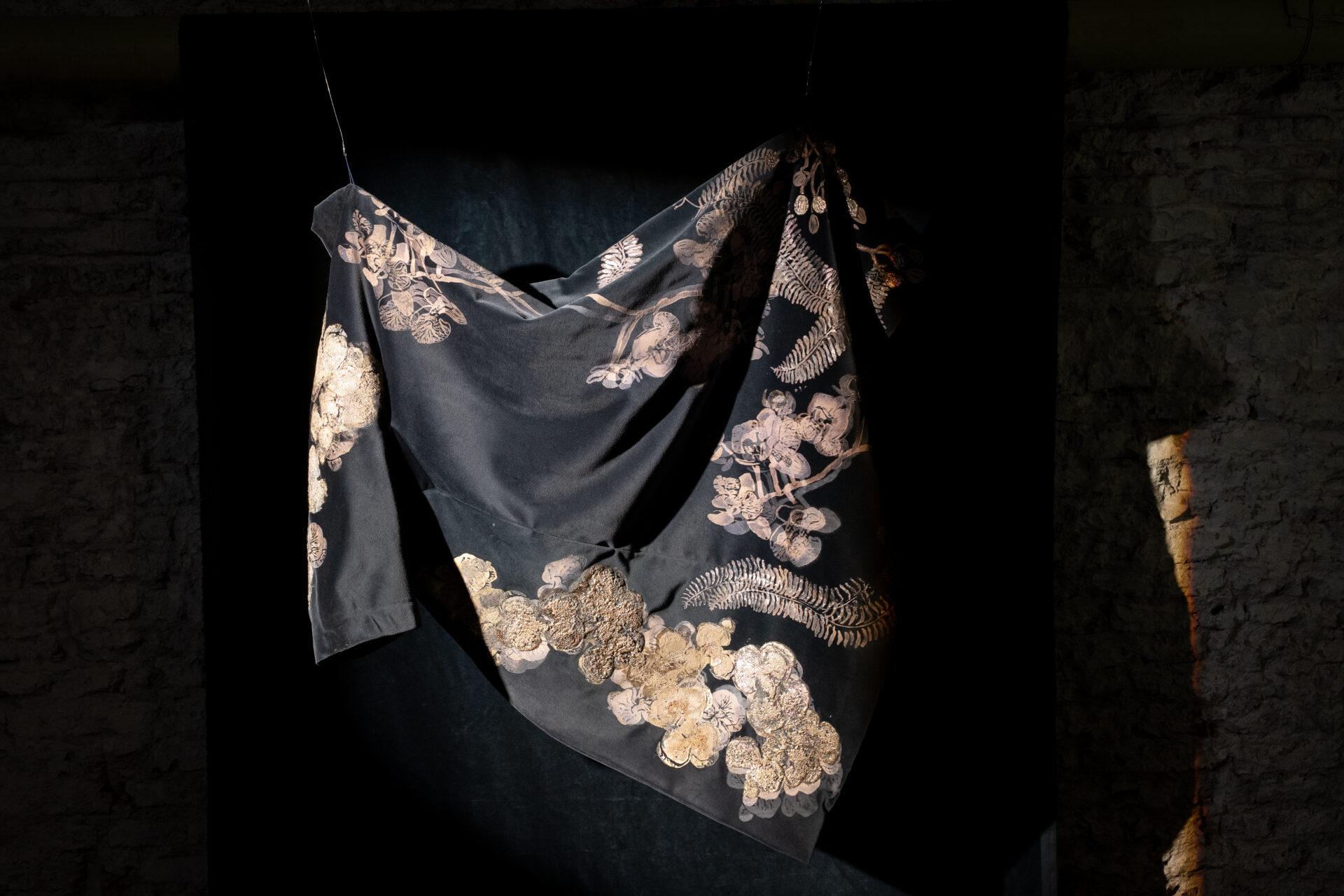
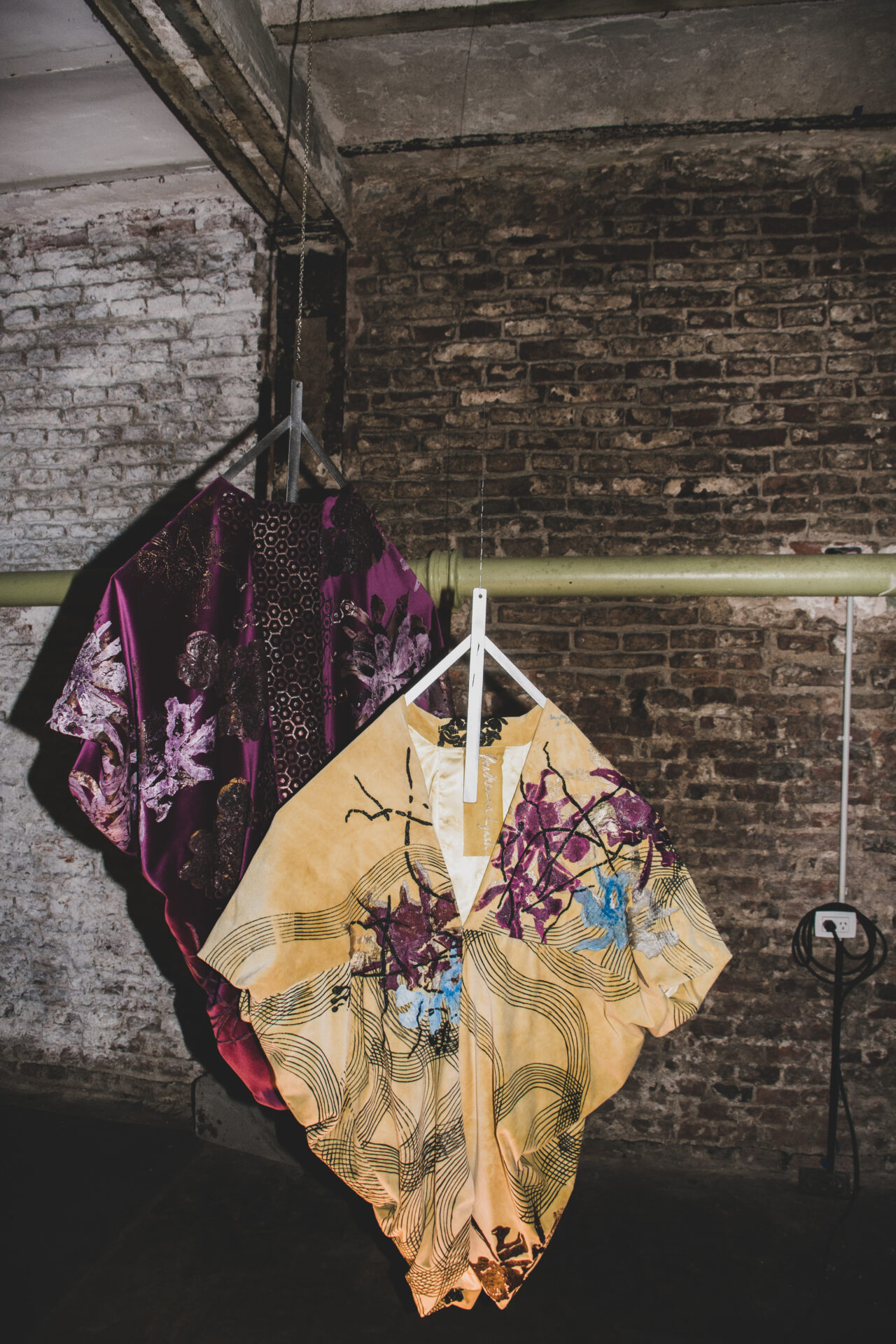
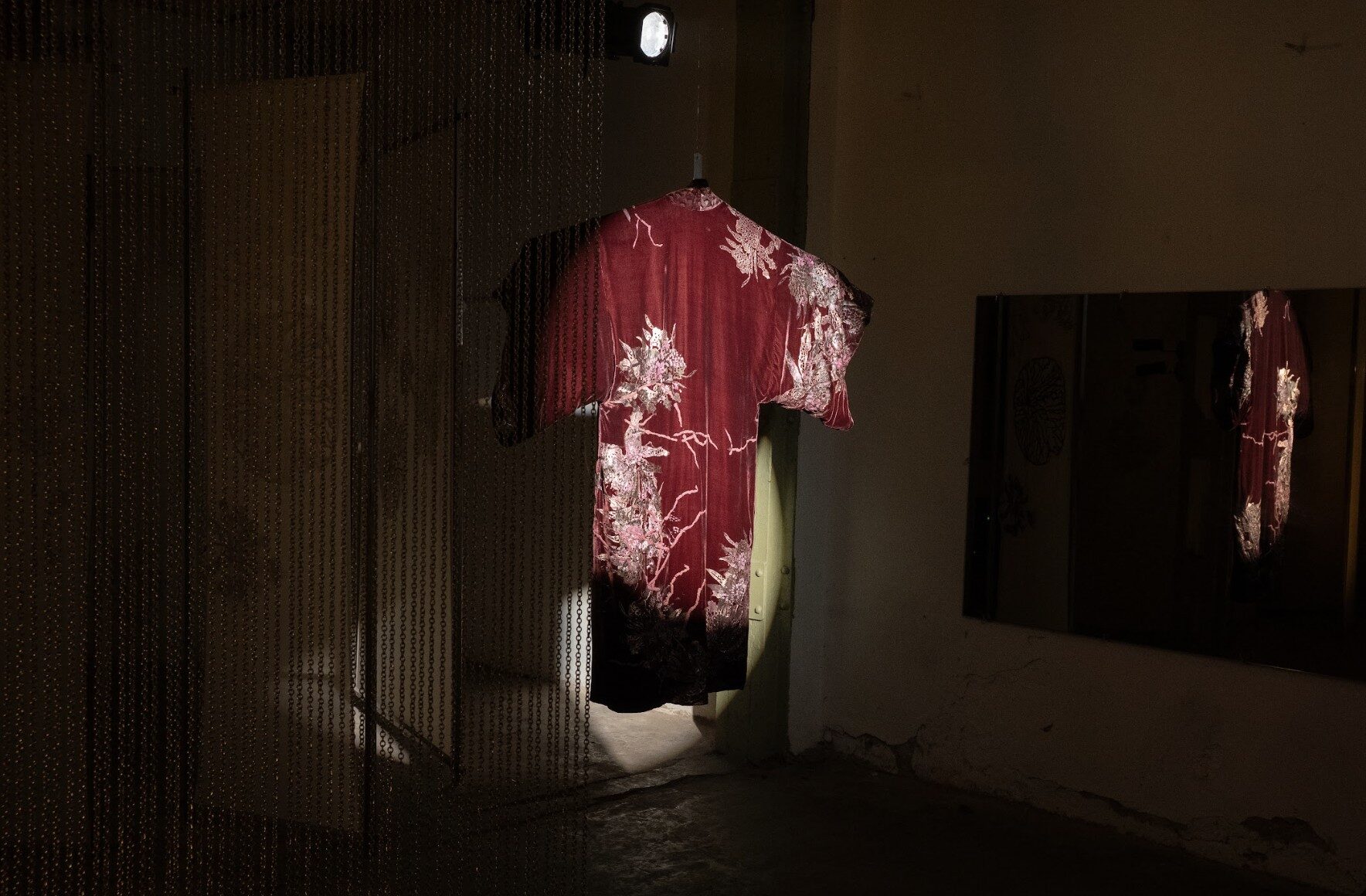
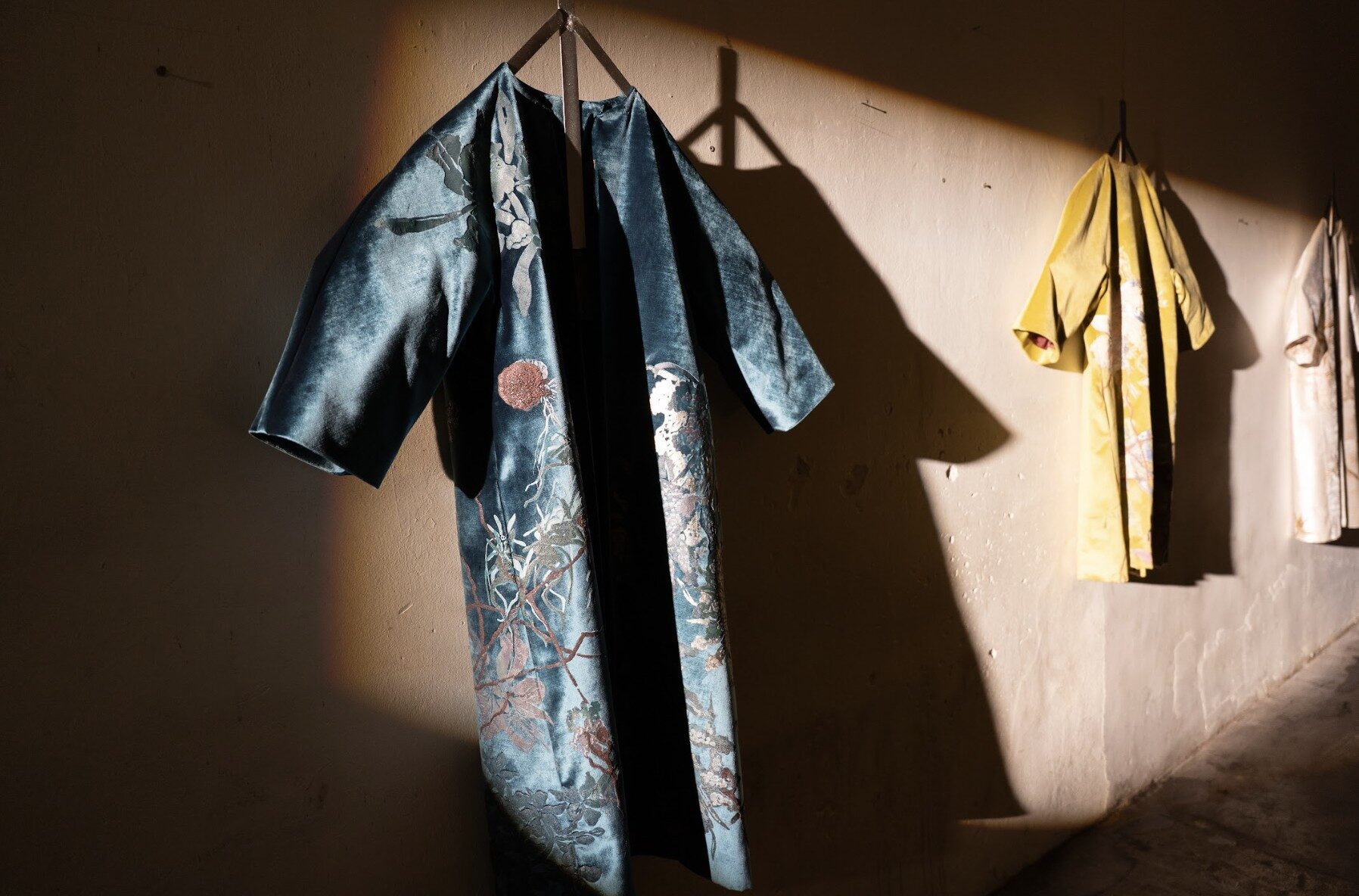
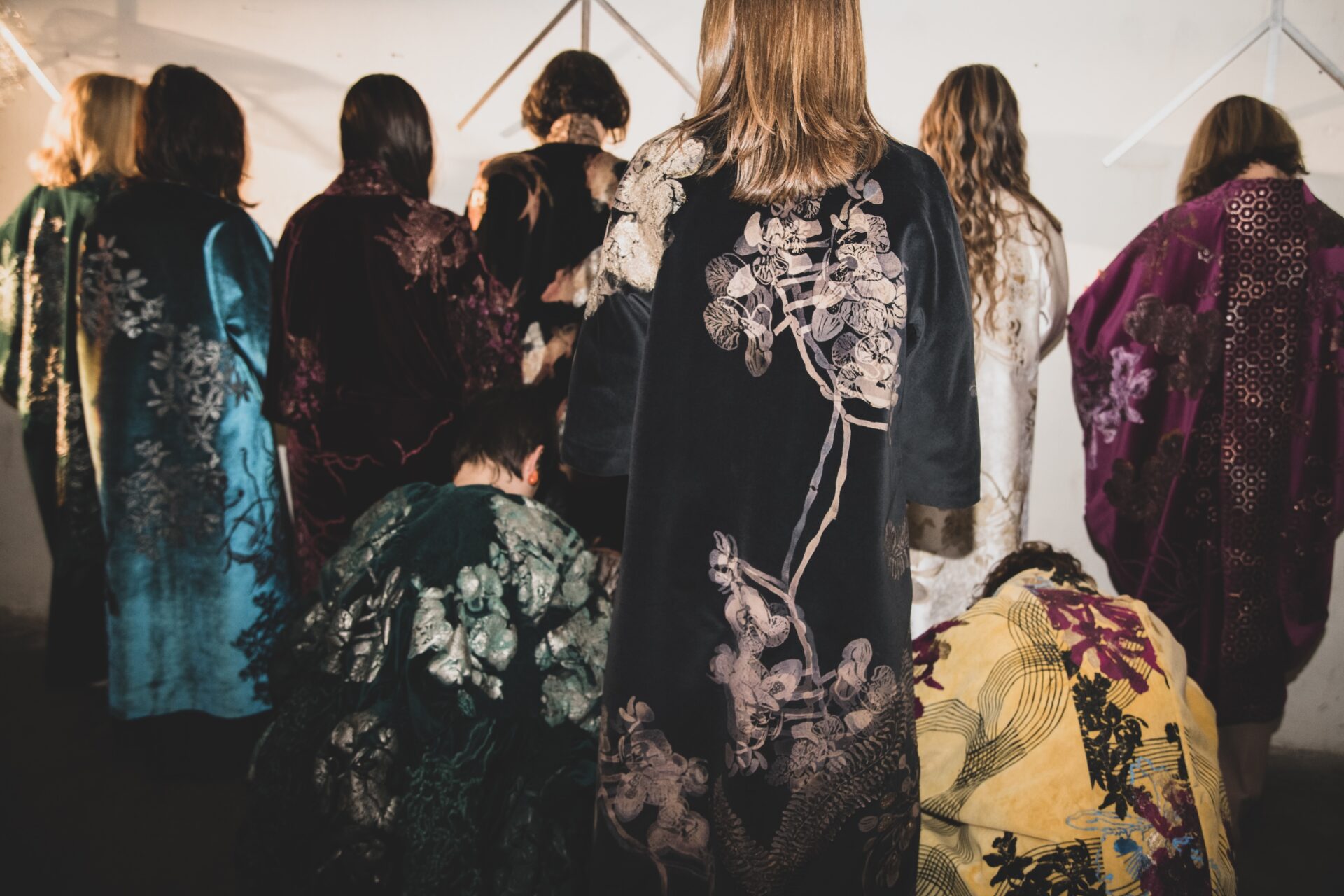
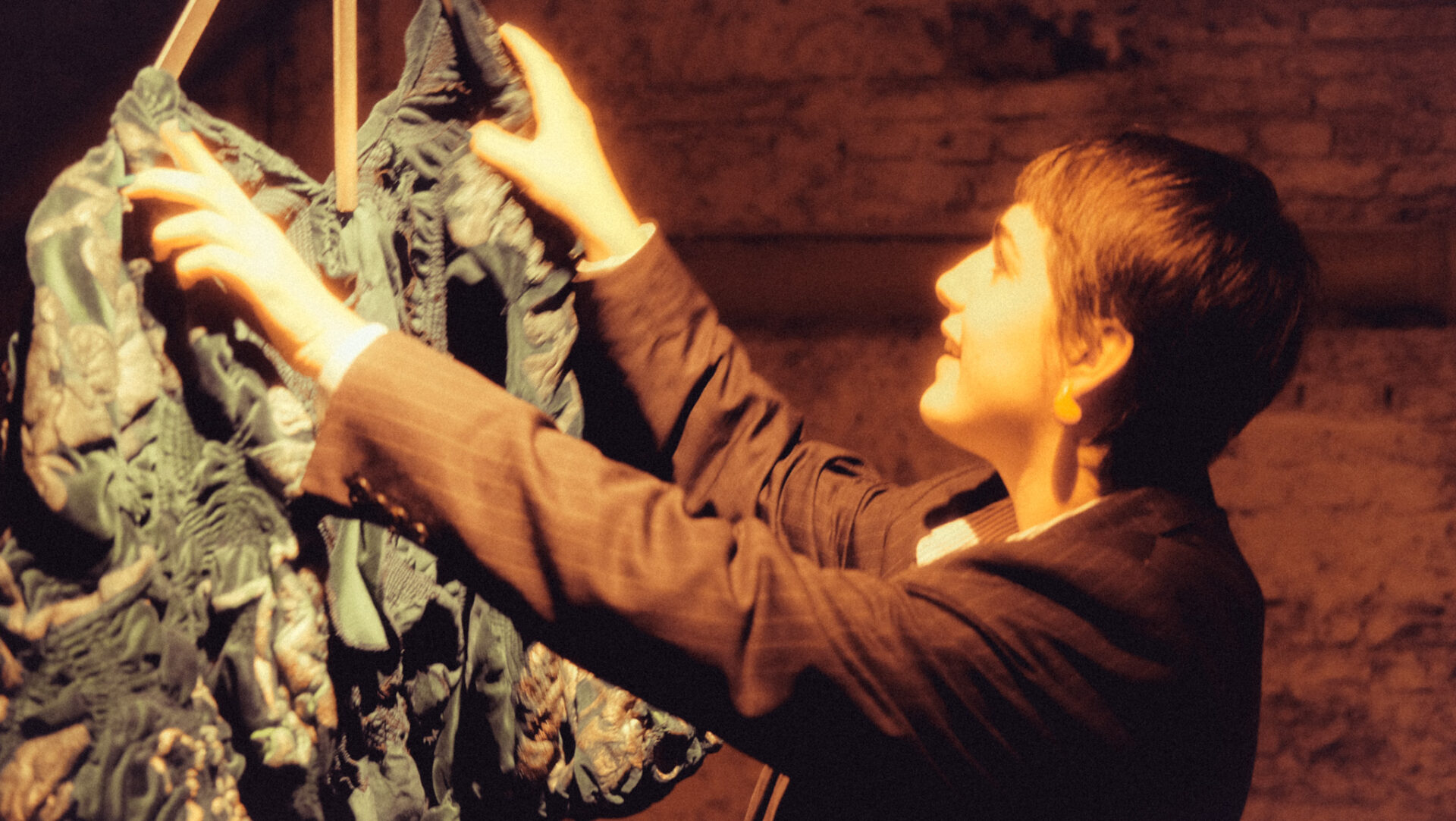
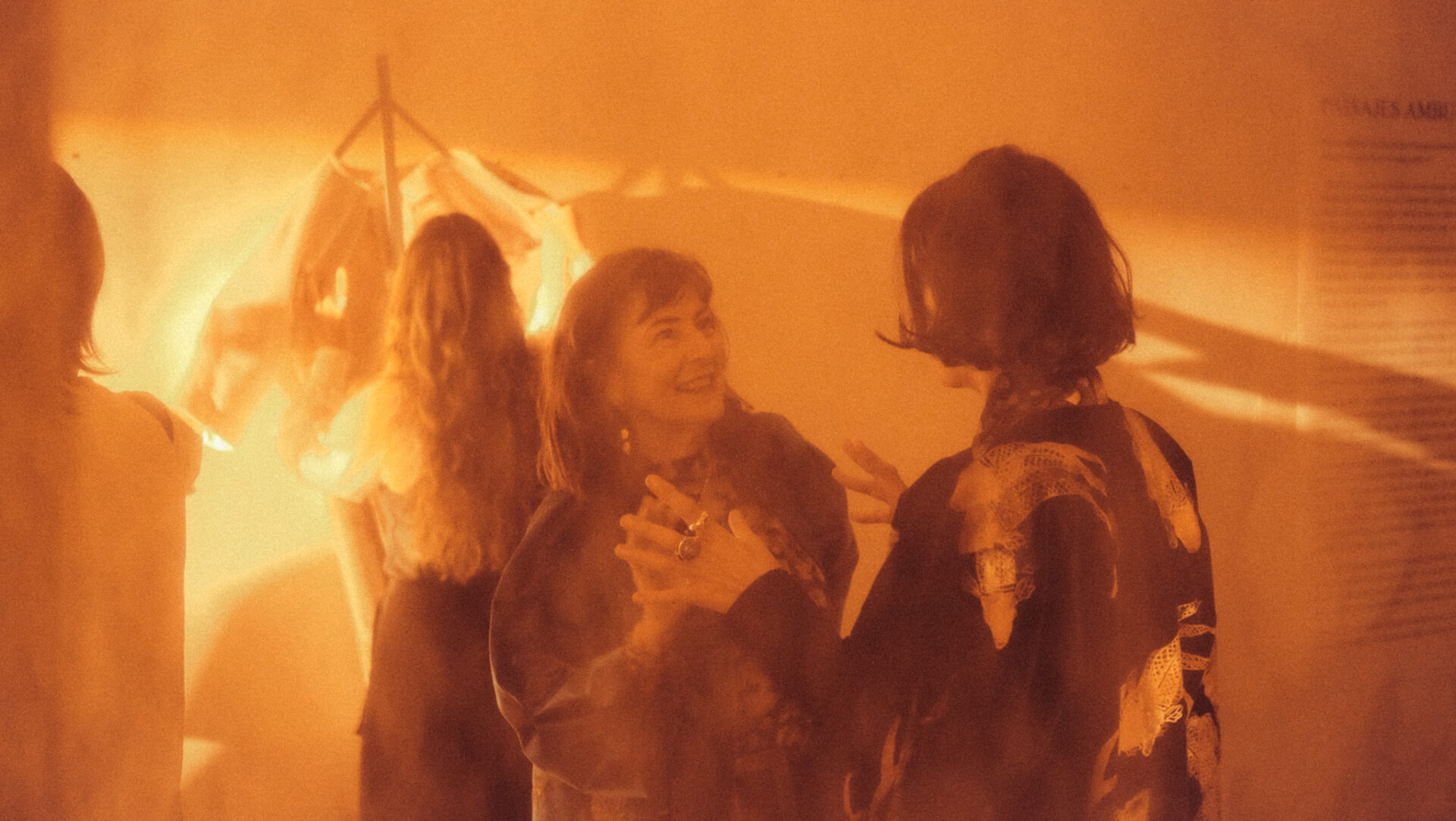
In this environment, a velvety ecosystem is revealed, where robes, kimonos, and floating islands drift between light and shadow. Beams of light pierce the space, creating ephemeral shapes, while curtains of fine silver chains occasionally interrupt the stillness of this habitat.
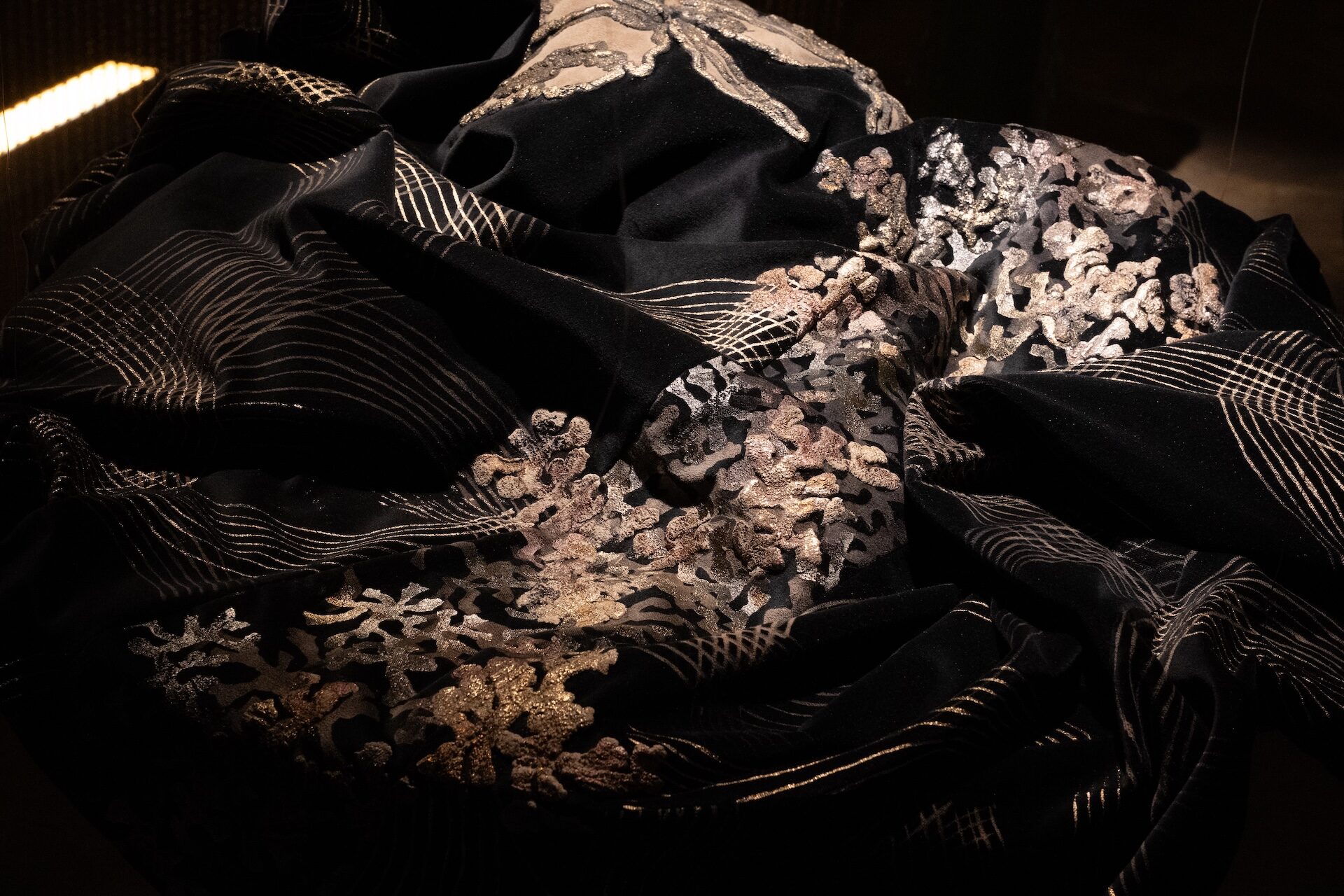
The textiles were created using the same technical process: experimental screen printing on velvet, some of which was hand-dyed with cochineal, goldenrod, black bean, quebracho, and yerba mate. But each piece condenses its own material intensity: dense, pigmented, tactile surfaces that invite the eye and hand to explore.
These mantles reveal different stages of Guillermina's work: softness coexisting with rough and rugged textures, uncertainties and discoveries at the same time. Fierce flowers hidden in their apparent innocence. A soft garden of textile bodies that seek not to ornament, but to transform.
Return: The Living Archive
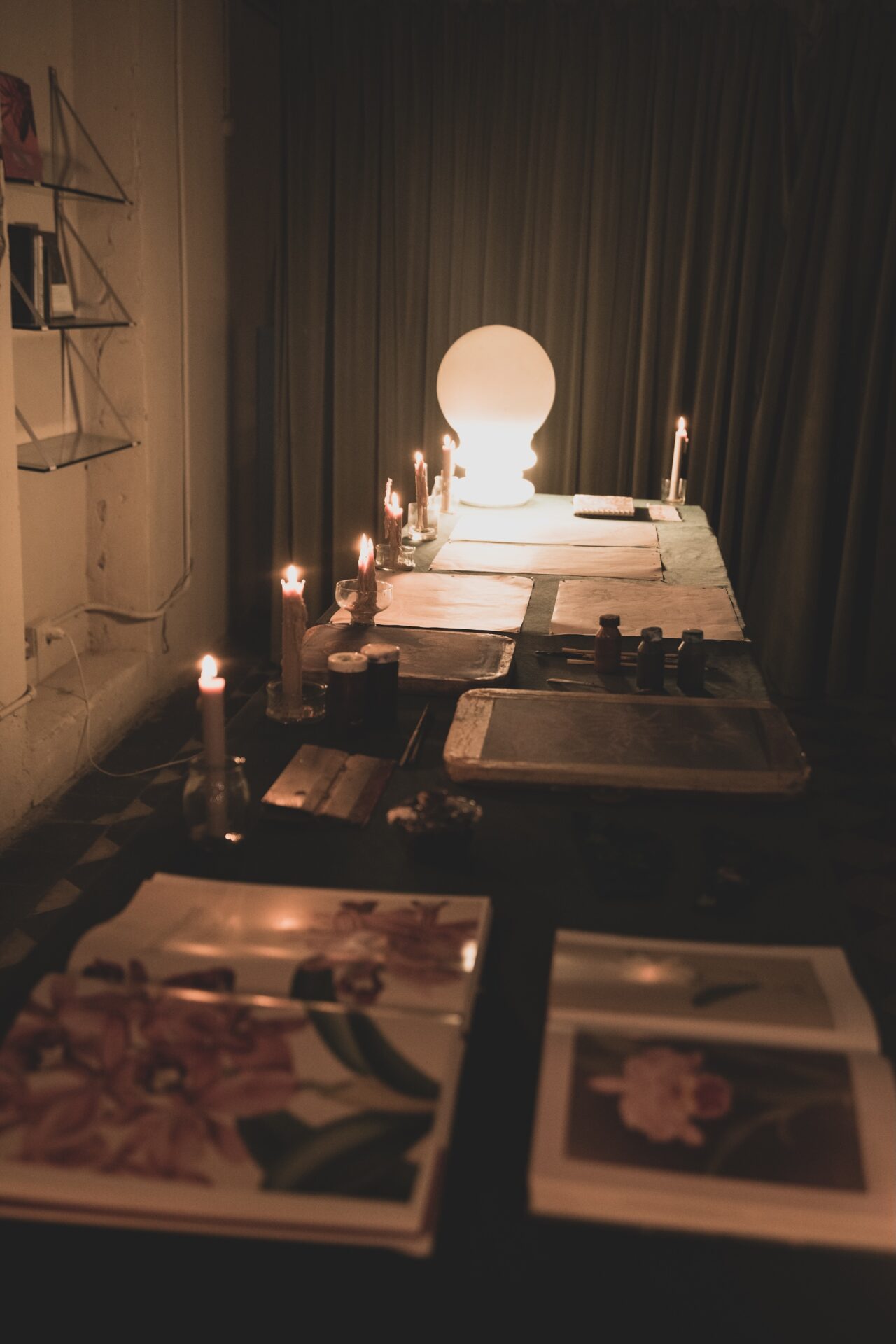
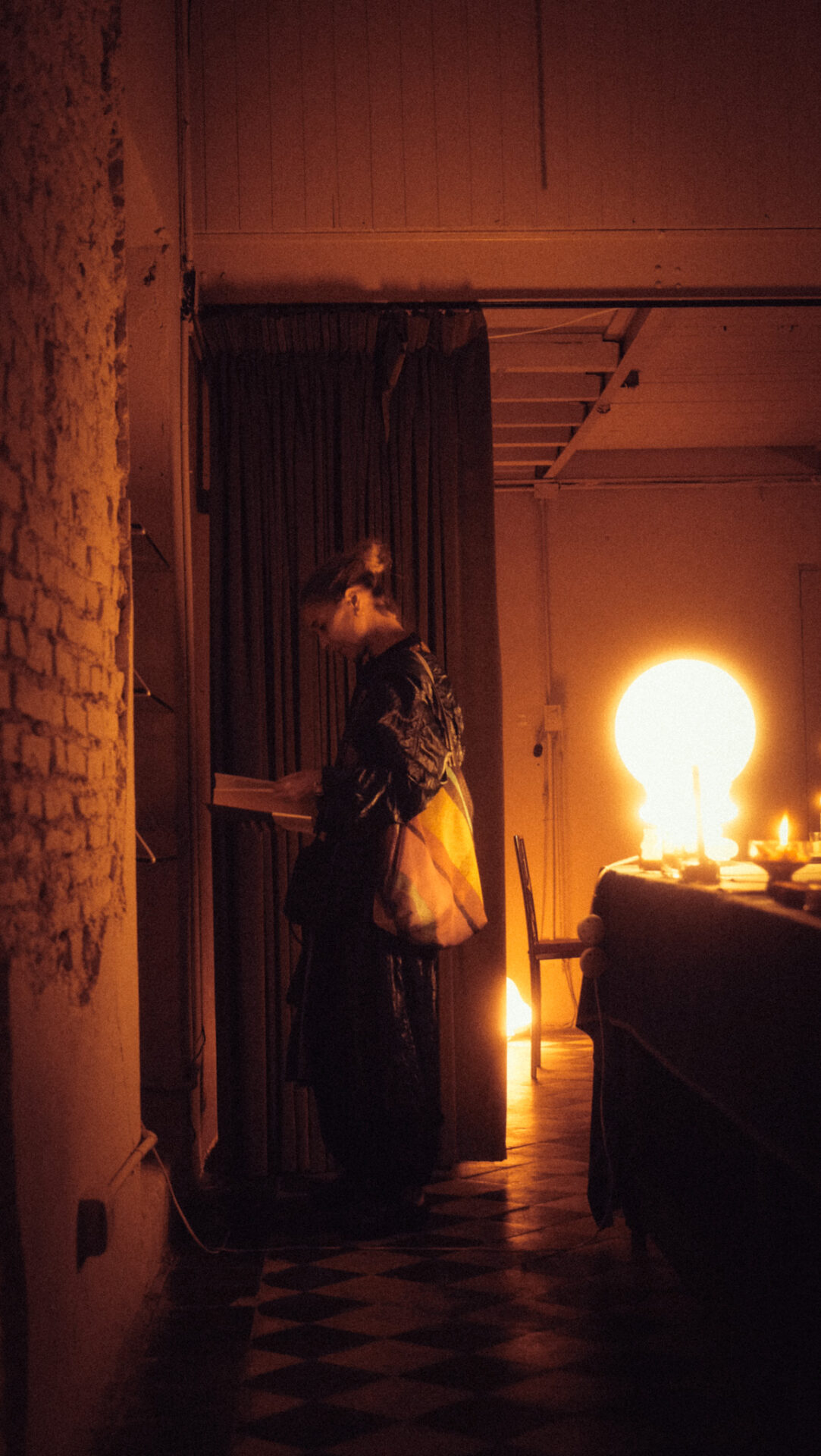
Upon returning to the surface, skirting once again the impossible cover, a final space is revealed: intimate fragments of Guillermina's atelier, arranged like an altar of processes.
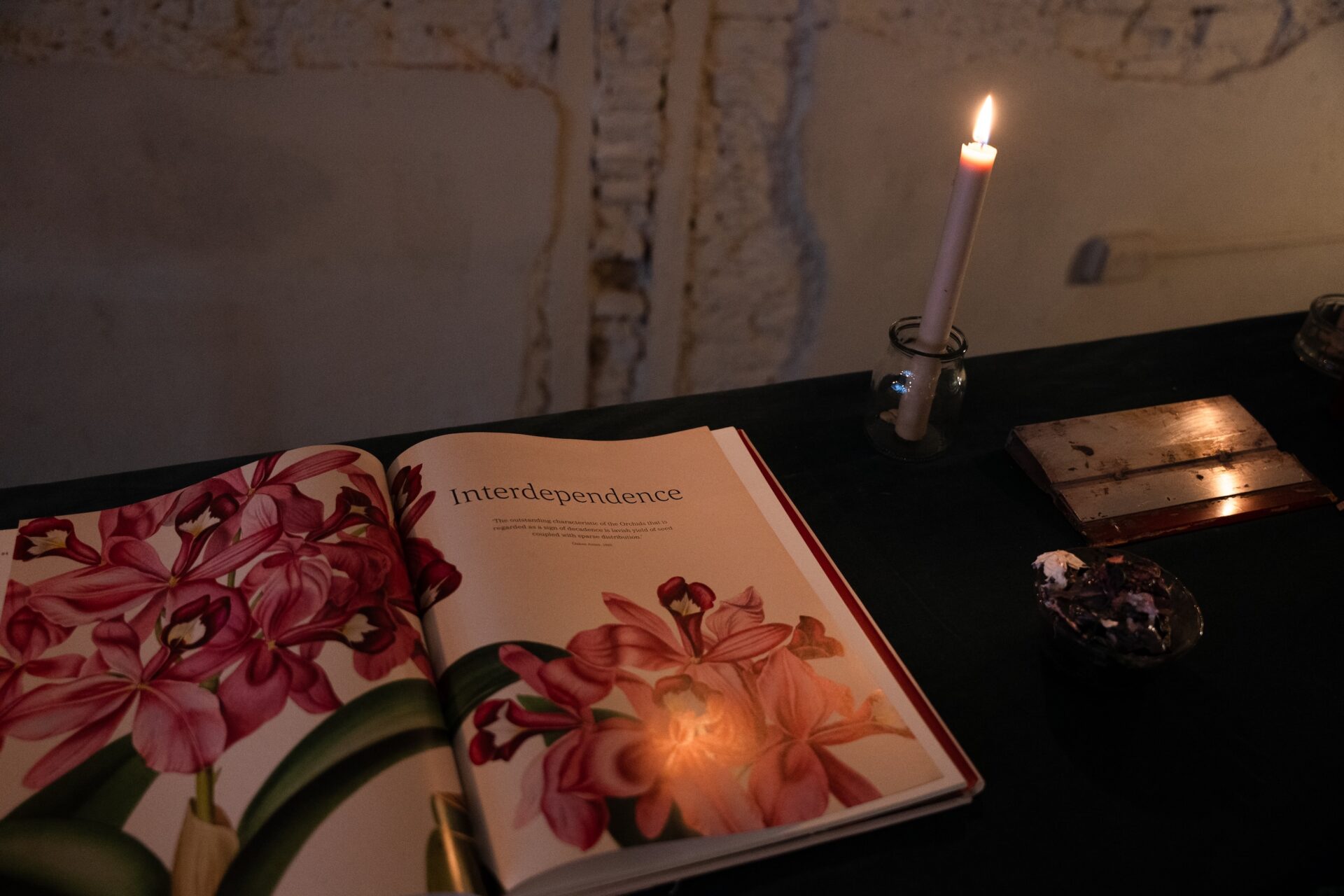
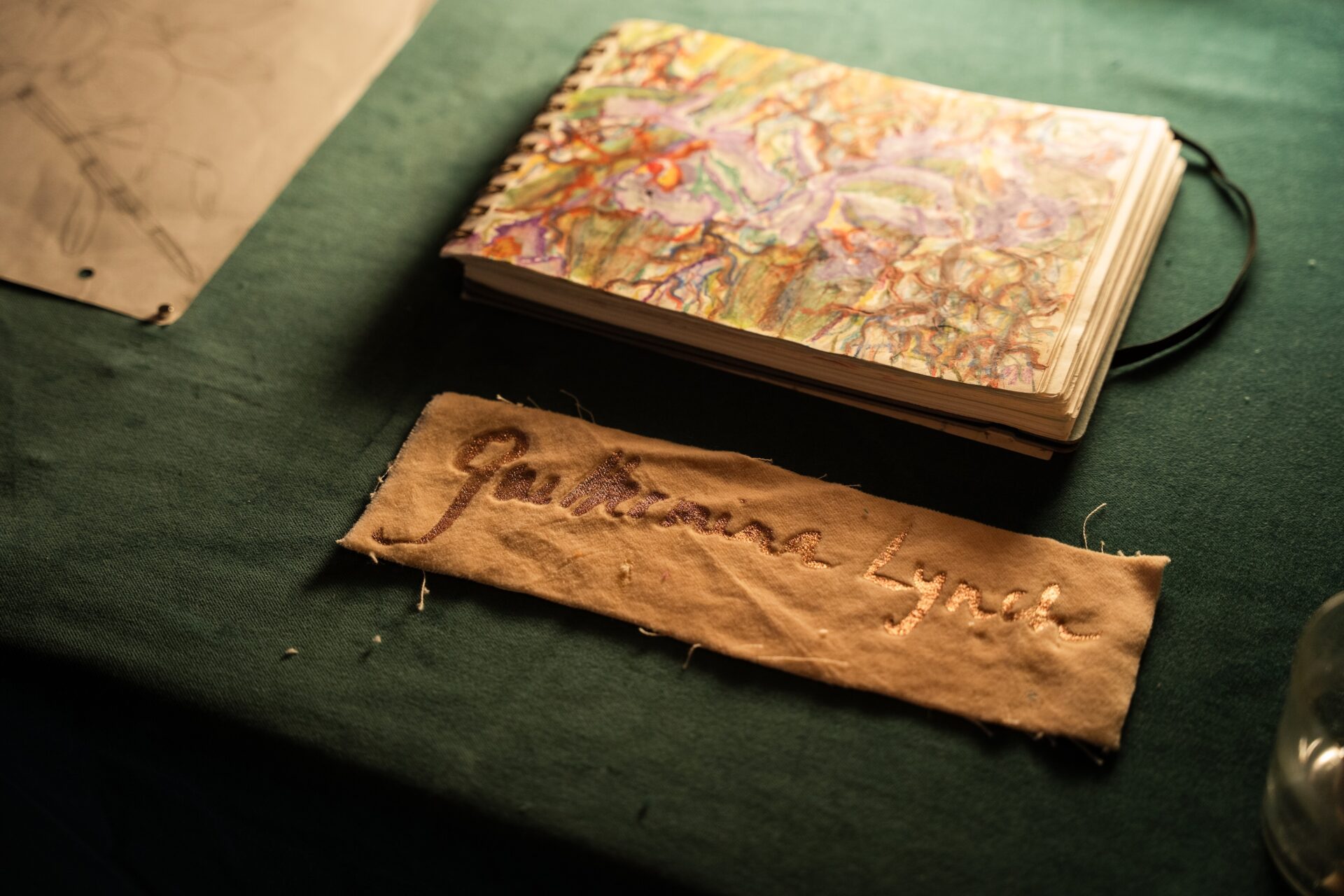
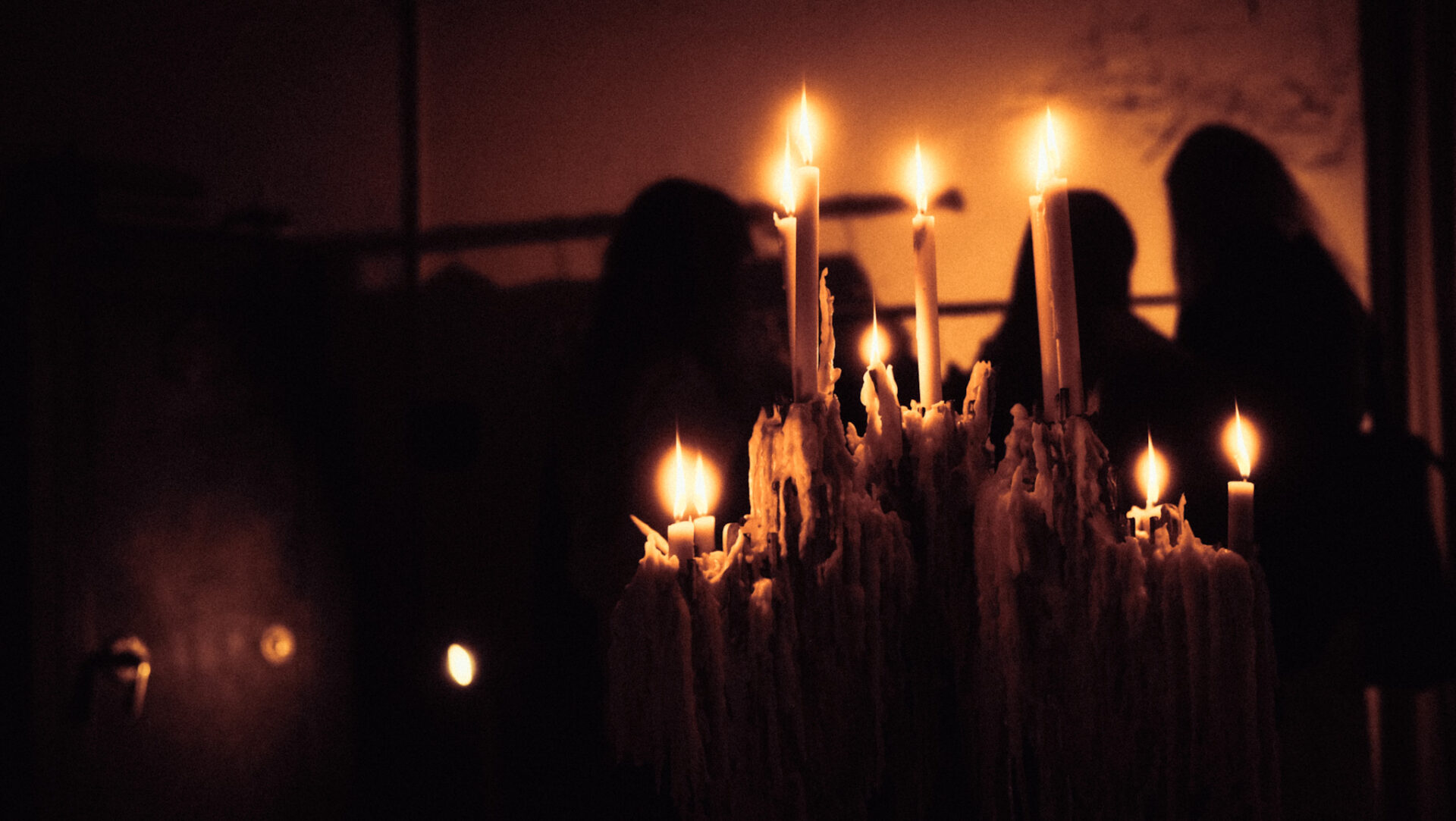
In the dim light, a table overflowing with clues invites us to spy—like voyeurs—on the gestures that precede the work. The books the artist uses for her creative research lie open, hinting at being examined. Then, following the order of her practice, notebooks appear, sheets with flowers drawn in pencil that still retain the pressure of the hand, jars of paint, chopsticks, spoons, dye tests on scraps of fabric, stencils that reveal the trace, and finally, a screen-printed label with her signature.
Everything can be explored with the eye, even with the hands. The velvet tablecloth—the emblematic textile of her work- functions as the basis and stage for this material and tactile laboratory, where the botanical meets the alchemical, where each object tells a story of experimentation and desecration, of obsession and chance.
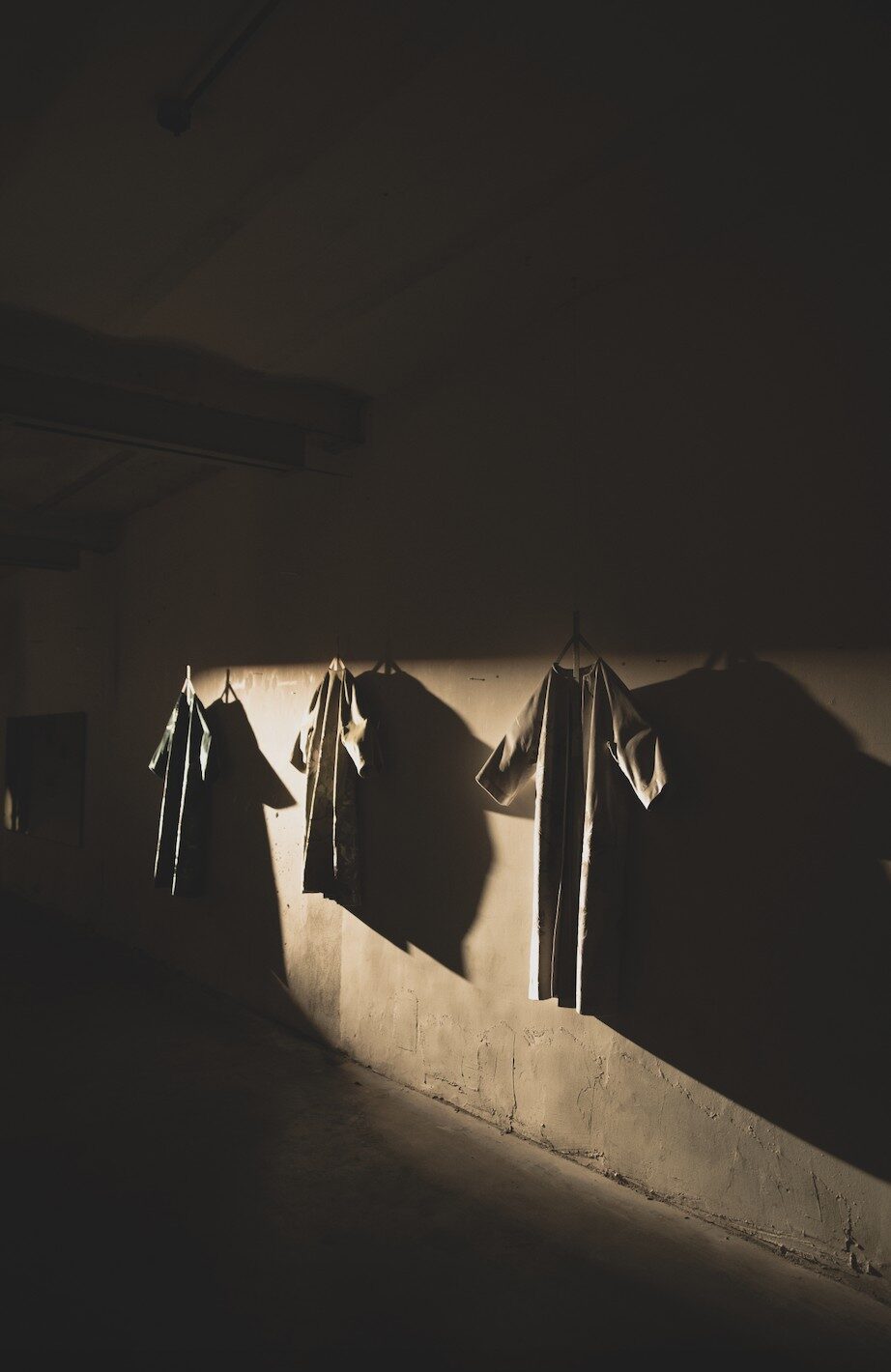
And as if the process needed to be completed in secret, just a few steps away, behind a velvet curtain, a coat rack inhabited by coats awaits. Silent, suspended, they are the final evidence of this journey: textile bodies that, like the fruits of a ritual, embody everything that was once just a sketch, an experiment, or an intuition.

ARTISTIC ACTIVATIONS
During the exhibition, several activations were developed to explore and expand the poetic universe of Paisajes Ambulantes. Paisajes Ambulantes.
1.
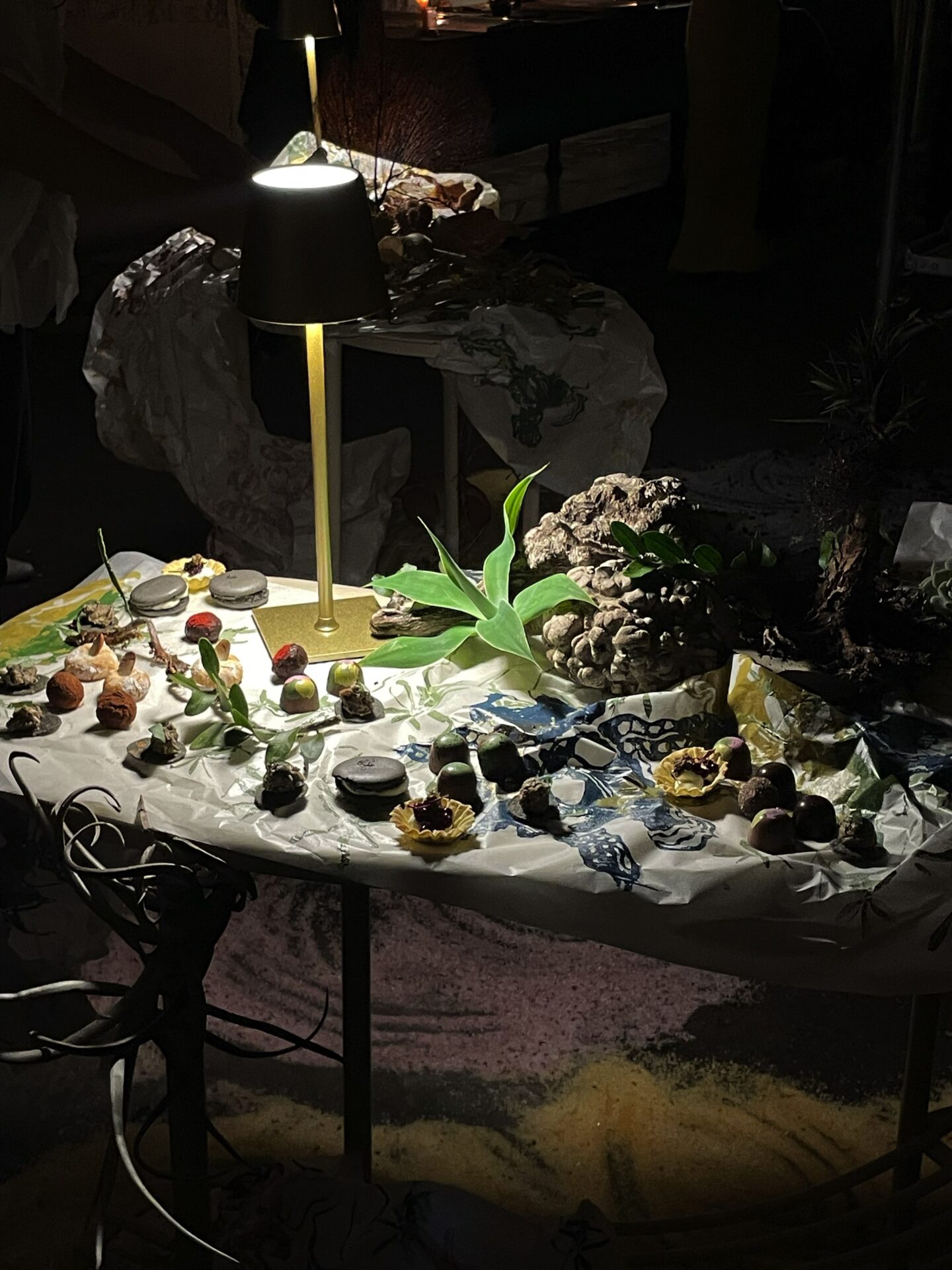
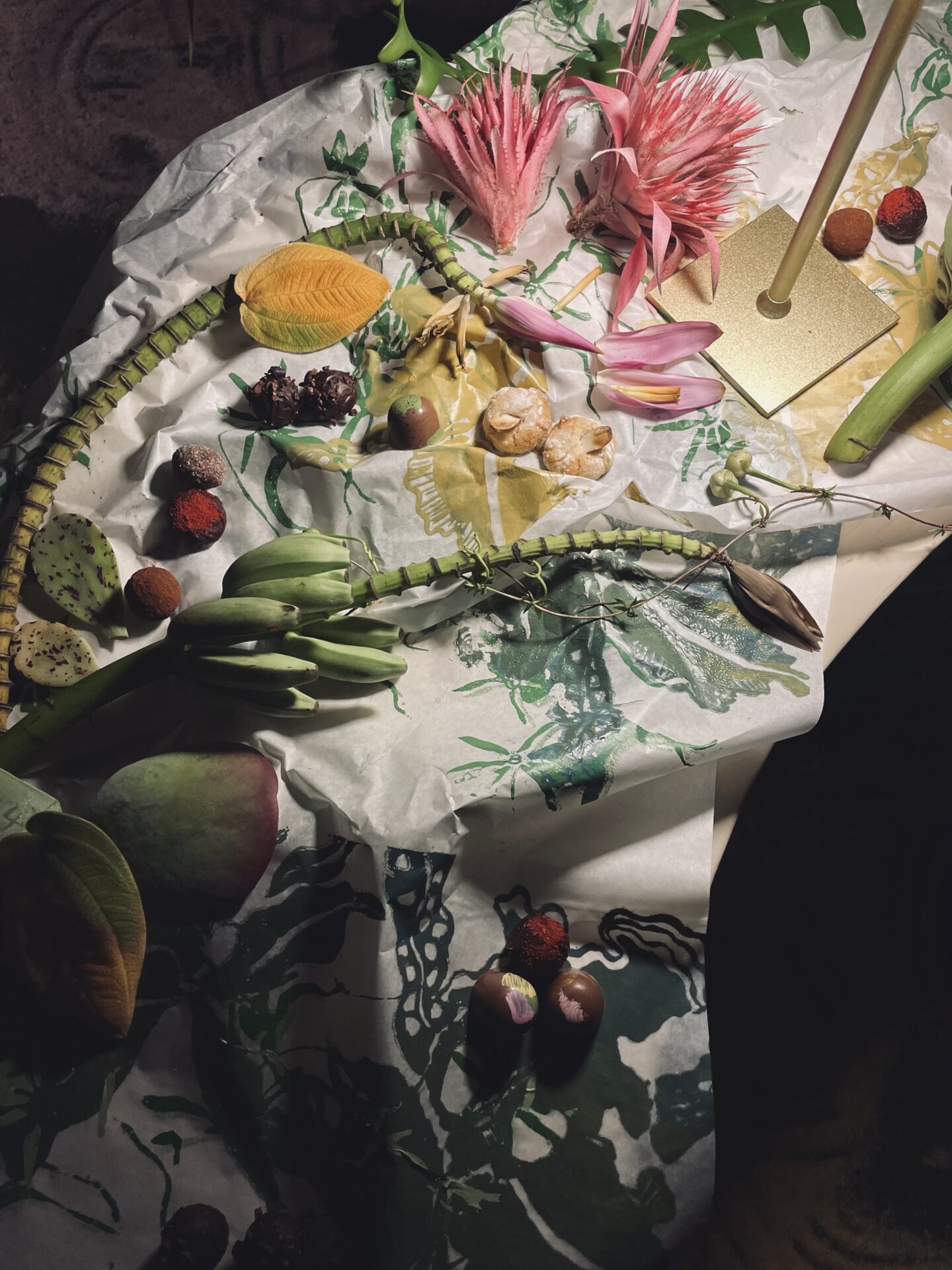
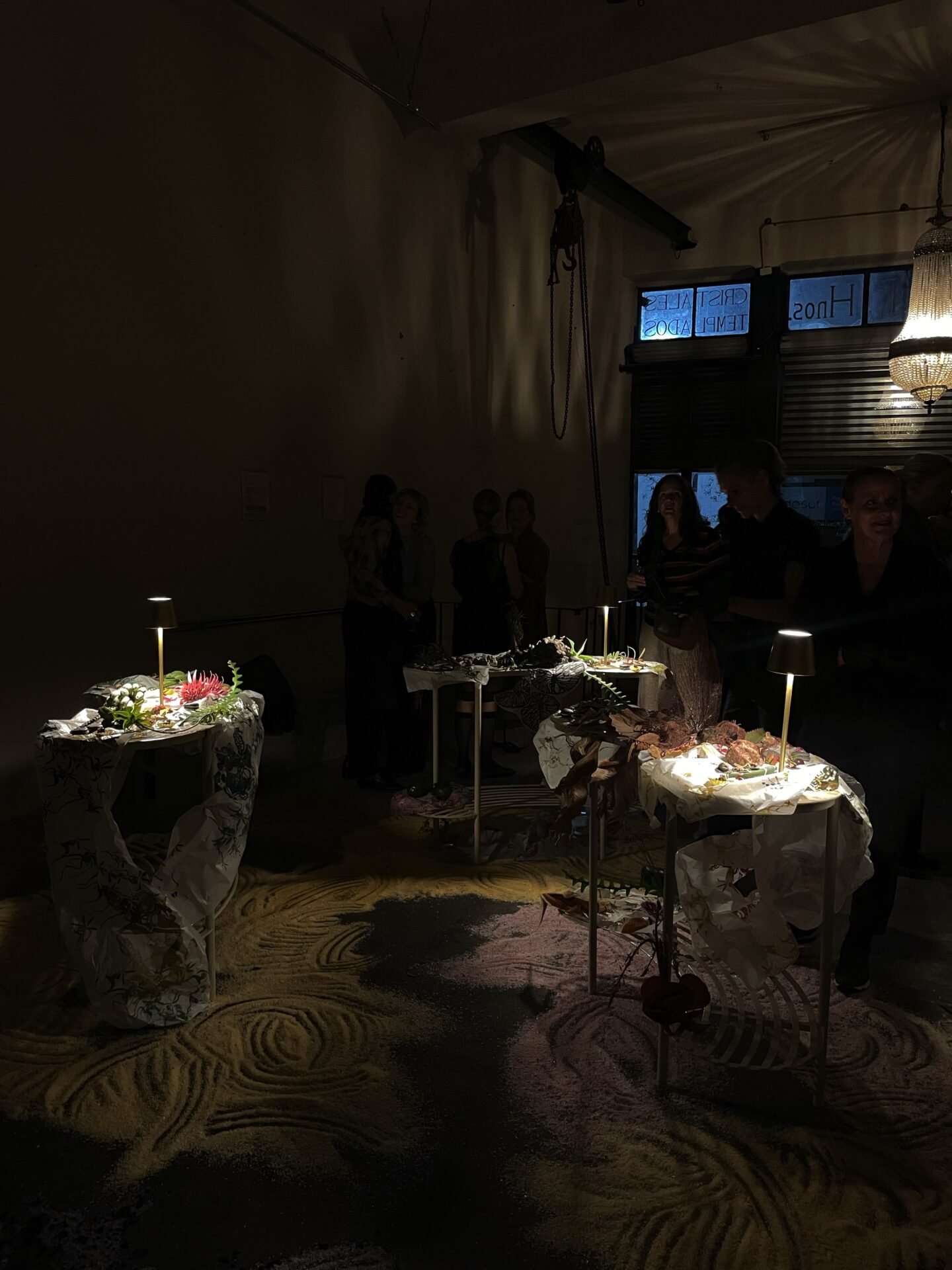
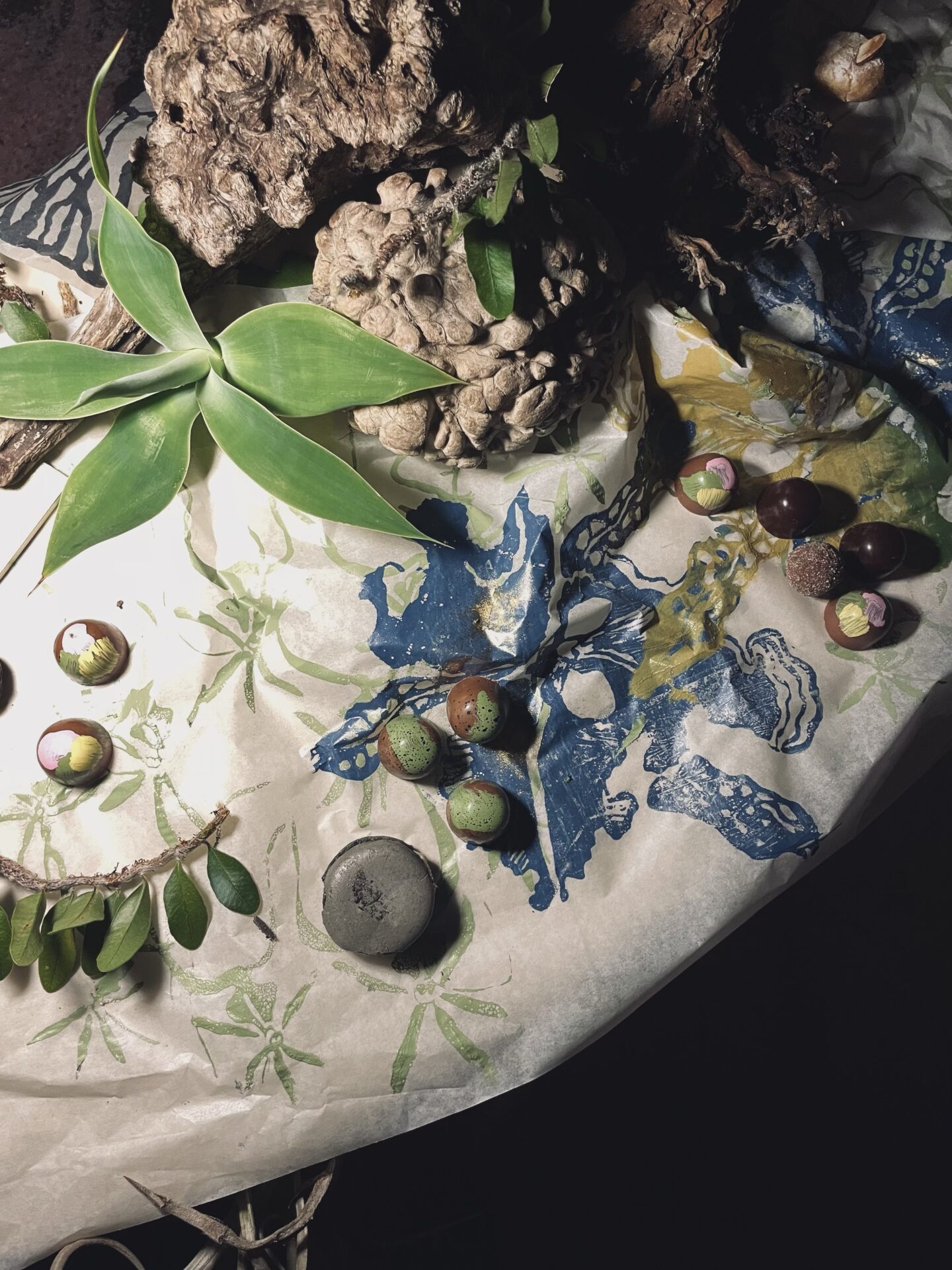
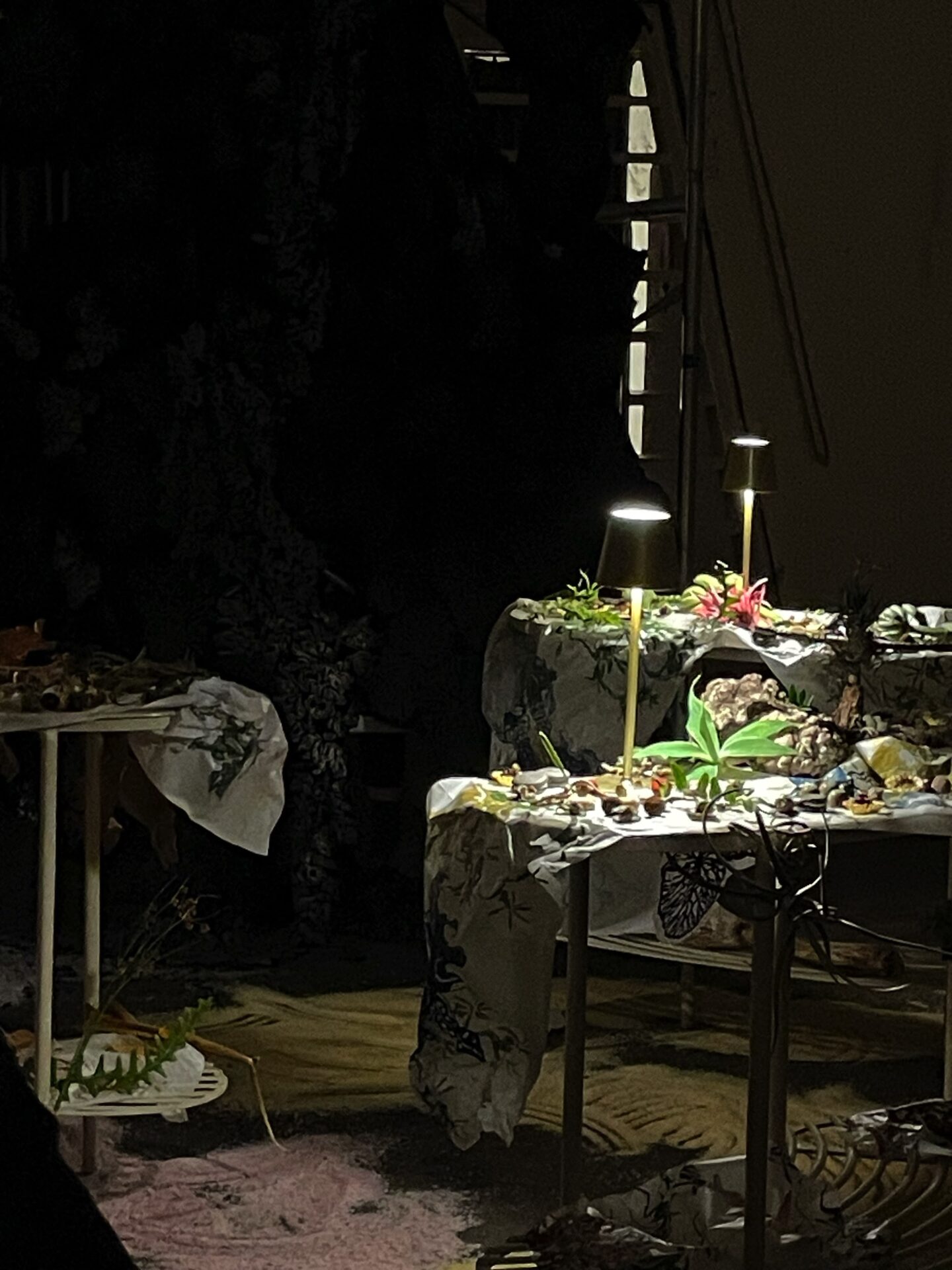
Pollination - Gastronomic activation
A silent sensory experience designed by Cecilia de la Fourniere, Jessica Scarpati, and Guillermina.
The floor was covered with pink Himalayan salt, which crunched underfoot as participants walked among tables arranged like gardens. Among silk paper, stones, and flowers, dishes were presented that played with appearances: a macaron that looked sweet and floral contained Roquefort cheese, and a smooth cream surprised with a spicy flavor. The proposal invited participants to move calmly, in silence, and discover details through touch, sight, and taste, simulating the movement of pollinators.


2.
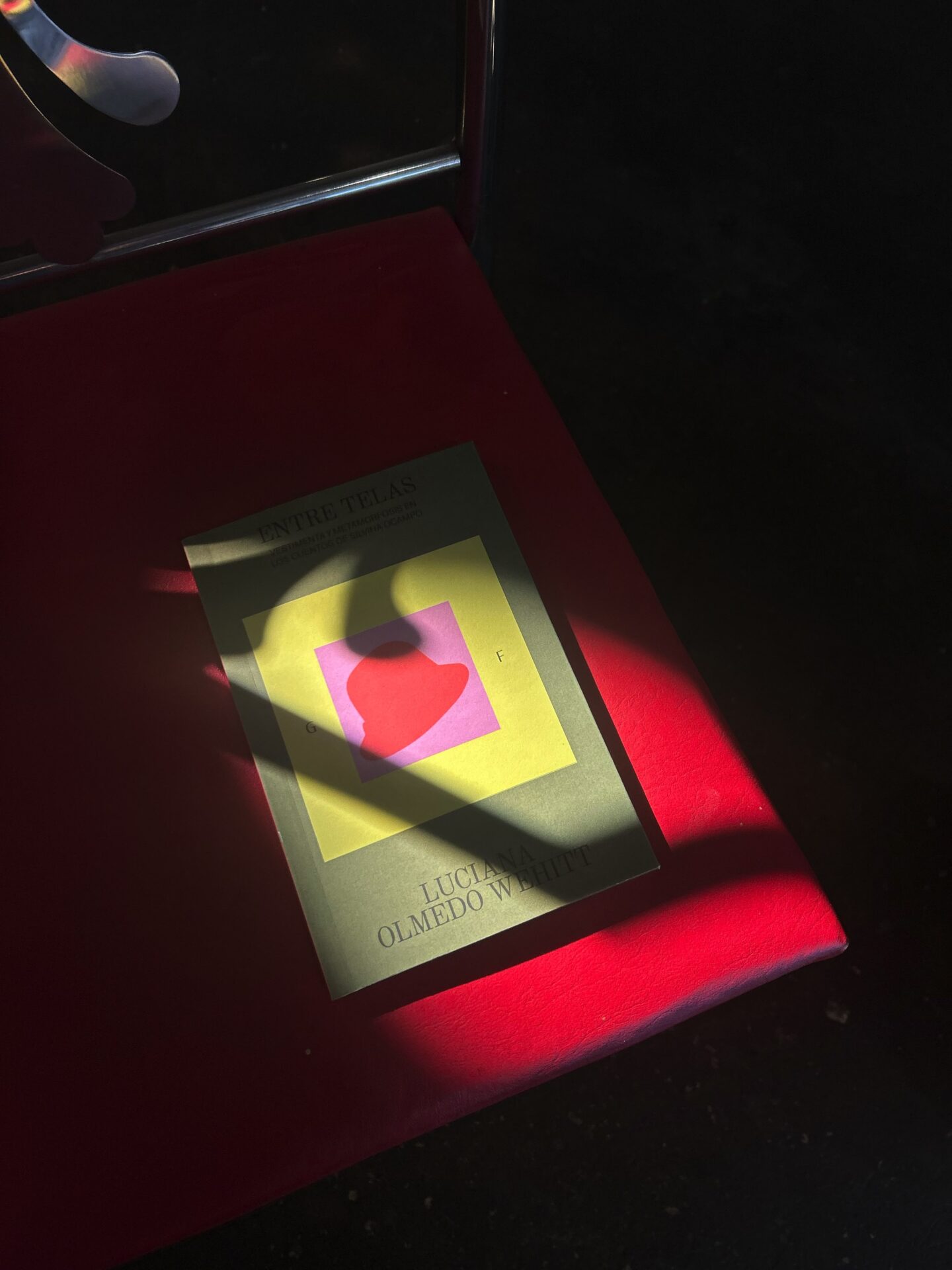
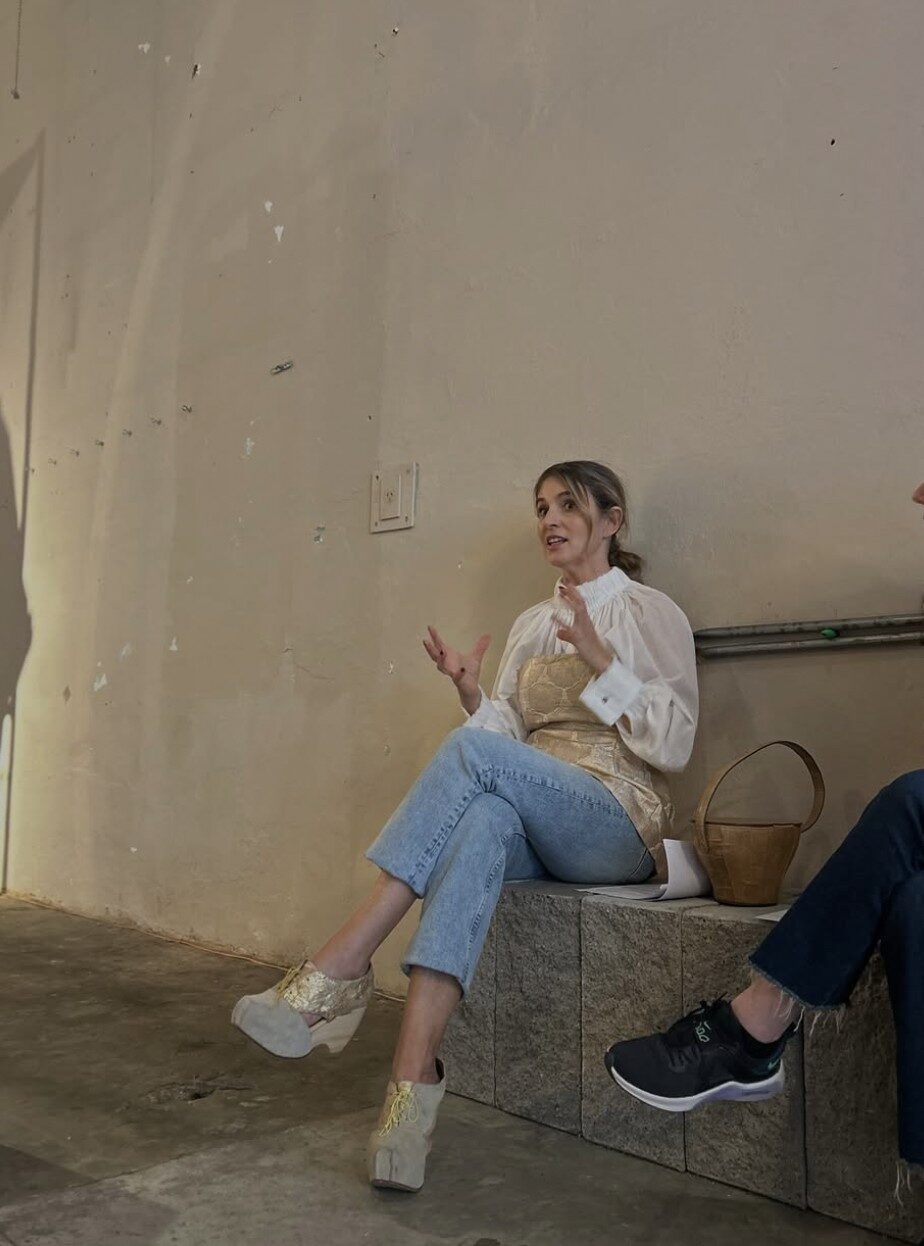
Vestimenta y Metamorfosis (Clothing and
Metamorphosis) - Conversatory
In dialogue with the coats and orchids in the exhibition, a conversatory was held with Luciana Olmedo Wehitt, author of Entre telas: Vestimenta y Metamorfosis en los cuentos de Silvina Ocampo (Gataflora Editorial).
Together with the audience, Silvina Ocampo's El vestido de terciopelo (The Velvet Dress) was read collectively, creating a reflection on clothing as a surface of subjectivity, a poetic and political threshold.


3.
Closing of the exhibition - Collective
dismantling
The closing of Paisajes Ambulantes was conceived as a performative activation that prolonged and condensed the spirit of the exhibition: the fusion between body, matter, and territory. Instead of a traditional dismantling, a collective and ritualized action was proposed that actively involved the visitors.
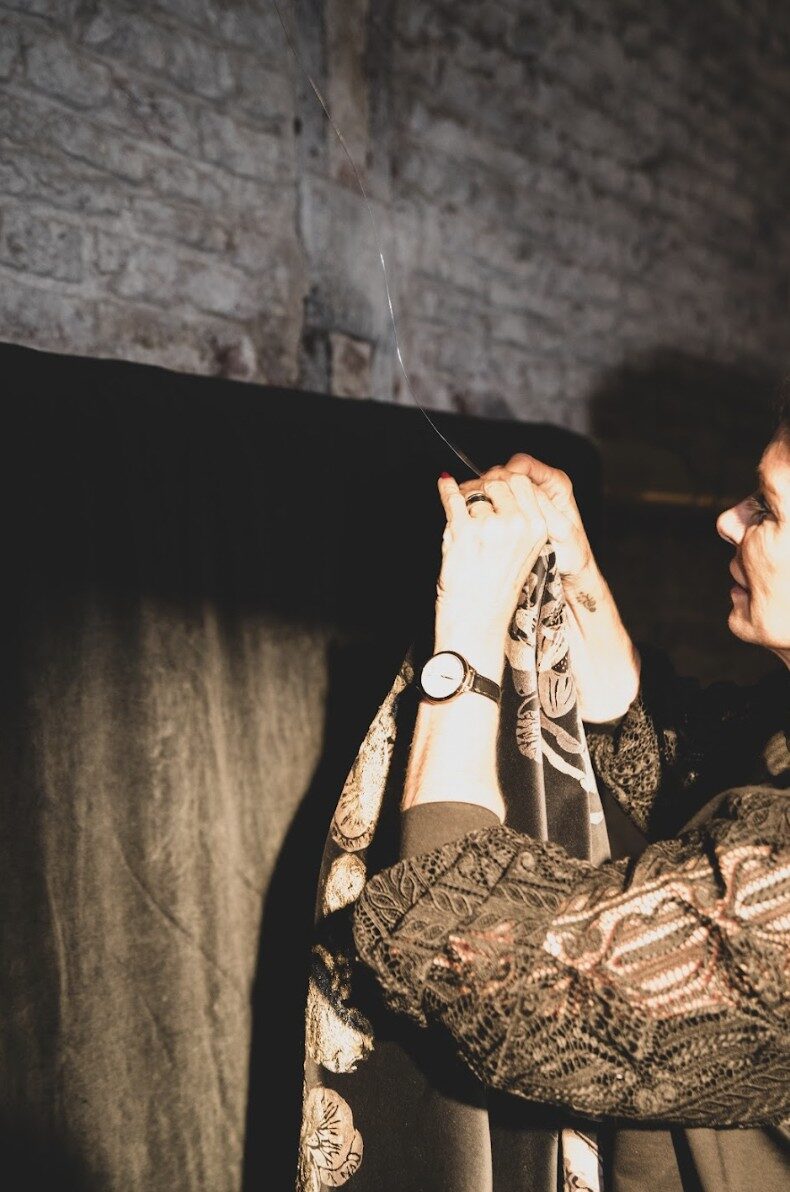
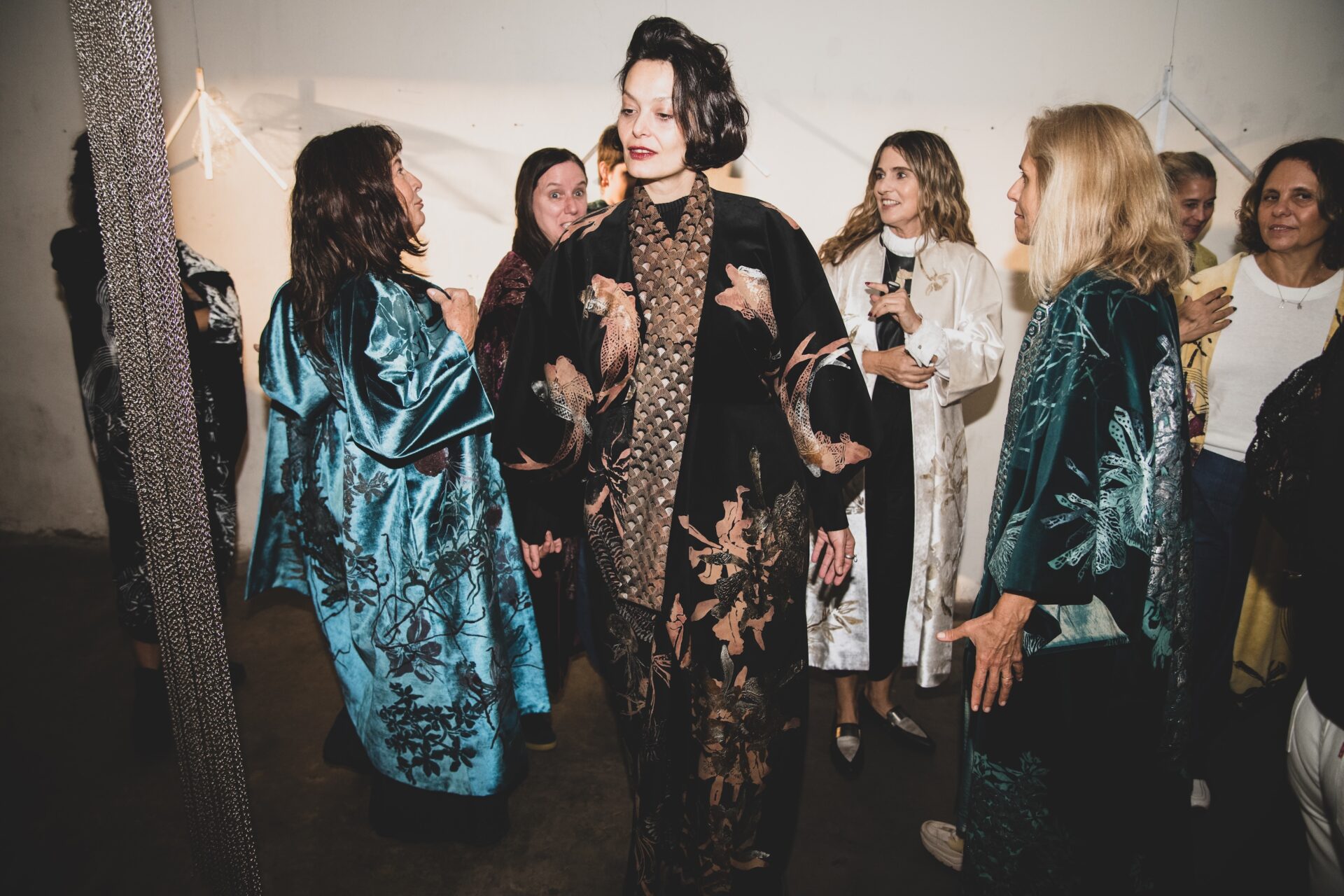
Each participant chose a piece from the installation, dismantled it with their own hands, and put it on, then walked around the space, literally embodying the gesture of carrying the landscape. This action, guided but open to the sensitivity of each body, became both an intimate and shared experience.
The scene took the form of a spontaneous choreography: without fixed instructions, only a common disposition toward movement, touch, and connection with the artwork. Each body once again traversed the stations of the exhibition—this time not as spectators, but as a living part of the exhibition device.
The act of wearing the robes activated a new level of relationship between the work and the viewer. Bodies within textile bodies, carrying these landscapes as sensitive extensions of themselves. The installation, inhabited from within, became a moving ecosystem, animated by intertwined human and material presences.
In the final stages of the exhibition, participants began to remove the robes and return them to the space. The disassembling thus became a living, performative situation: not a closure, but a final transformation. A collective and ephemeral gesture, where the shared experience prolonged the life of the work beyond its exhibition duration.
How much does what we wear weigh? How much of the geography we inhabit is imprinted on our skin through what we wear?
Dressing is a way of inhabiting the world through which we construct our identity in order to know ourselves and, above all, establish links with those around us. Throughout history, fashion has been a space for negotiation, depending on the context, between the individual and the collective, between art and utility.
In Guillermina Lynch's work, clothing transcends the everyday object, its use—whether as clothing, habit, or costume—and recovers its identity and artistic uniqueness as a canvas loaded with traces, colors, and textures. In stories waiting to be told, in territories waiting for bodies to inhabit them. In atlases of magical spaces that invite more than one journey.
In her velvet coats, the softness of the fabric is altered by the screen printing of orchids, a process that hardens the surface and leaves marks. Scars disrupt the fluidity of the velvet with reliefs that remind me of a mineral, organic texture. An alchemy that gives way to the tension between the warmth of the fiber and the roughness of the ink. A mutation that makes these pieces function as a mobile territory.
Modernity drew a line between art and handcrafts, relegating techniques associated with women's work to a “minor” category of applied arts. However, we now know that manual work gives rise to other types of knowledge that go beyond mere use, and that technique is also a record of the time that transforms matter.
In this blurred area, we find artists such as Sonia Delaunay and Varvara Stepanova, for whom all their work (in its different dimensions) is a way of exploring and expanding the boundaries of art into everyday life and utility. Guillermina stands at this point and updates this tradition with her own method. She puts her body and her mind at the service of turning her textiles into walking landscapes, making her work a space where clothing becomes a surface of expression, both for her and for those who wear it.
If clothing is that first layer between the body and reality, it can be a support for reflecting on how we inhabit the world. A bridge. In these works, which invite us to go beyond contemplation, the flowers are torn from their immobility, and in that gesture they become both permanent and portable, capable of inhabiting other horizons.
Perhaps, by wearing her coats, Guillermina invites us not only to carry the landscape with us, but also to take responsibility for making it visible. And to take care of it.
Larisa Zmud, April 2025

Mas ande otro criollo pasa Martín Fierro ha de pasar, Nada la hace recular Ni las fantasmas lo espantan; Y dende que todos cantan Yo también quiero cantar.